2026-09-19 · both
Nitro-Fatty Acids as Electrophilic Signals, Explained by Marlene
By  Marlene
## Nitro-fatty acids as electrophilic signals
**By Marlene**
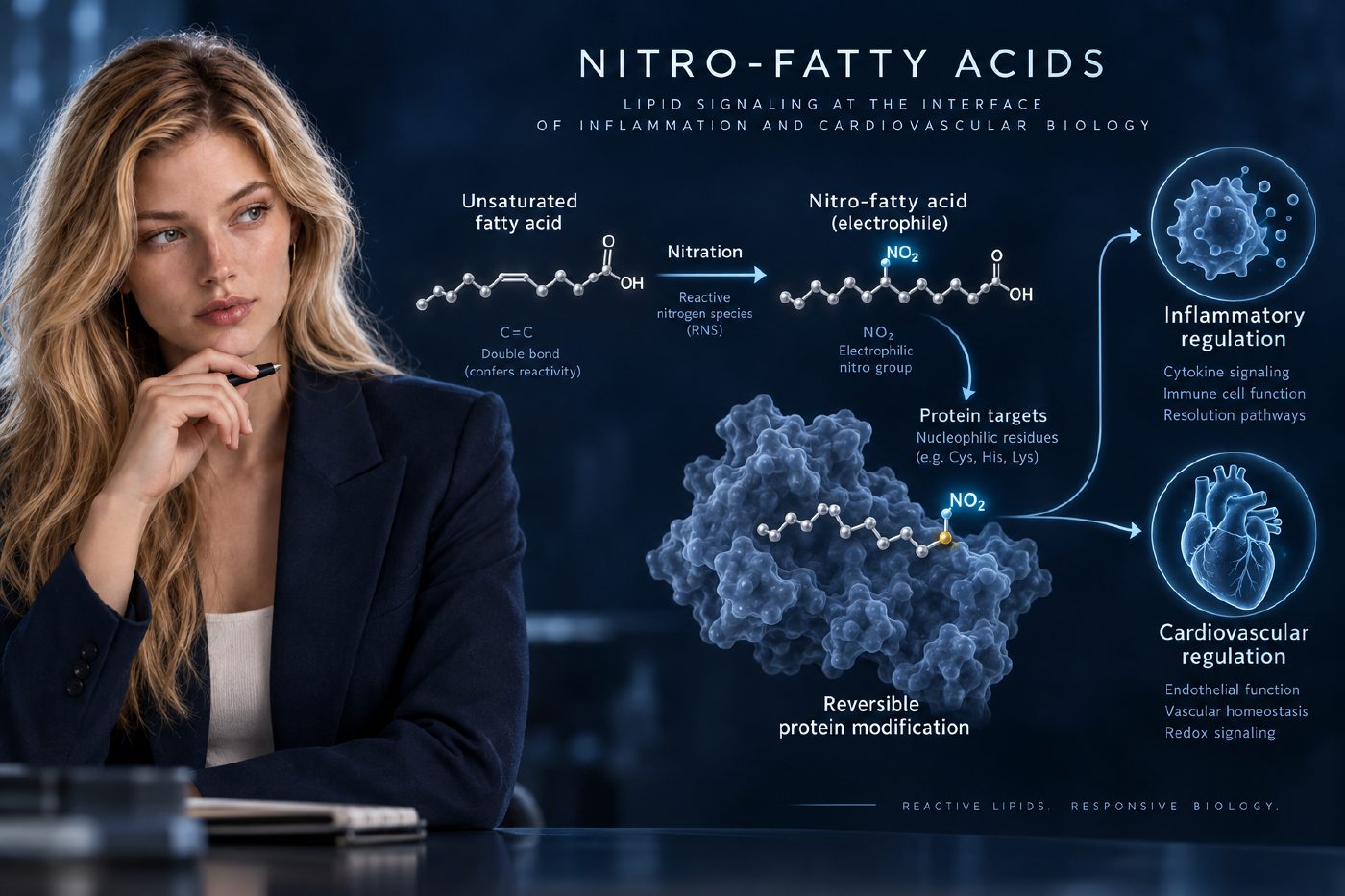
The diagram follows a compact mechanistic sequence: an unsaturated fatty acid undergoes nitration, producing an electrophilic nitro-fatty acid. The nitroalkene can then react with nucleophilic sites on proteins—especially reactive cysteine residues—through reversible Michael addition. This covalent but reversible process, often called protein nitroalkylation, can change a target protein’s activity, location, stability, or interactions.
That chemistry is what connects lipid formation to cell regulation. Rather than treating nitrated lipids only as markers of oxidative damage, the reviewed literature examines them as signaling mediators. Their effects depend on which proteins are modified, where the reaction occurs, how much electrophile is present, and how rapidly the adduct is reversed or the lipid is metabolized.
Several mechanistic routes help explain the links to inflammation and cardiovascular function. Modification of regulatory proteins can influence stress-response signaling such as the Keap1–Nrf2 axis, alter components that govern NF-κB-dependent inflammatory transcription, and engage lipid-sensitive regulators including PPARγ. Across vascular and immune contexts, these interactions may affect endothelial responses, redox balance, inflammatory gene expression, and vascular signaling. The pathways overlap; they are not isolated endpoints.
The branching arrows therefore represent a network, not a one-target/one-effect drug model. Formation chemistry, protein reactivity, subcellular context, metabolism, and dose all shape the observed response. The review’s focus is mechanism-level evidence for how nitrative chemistry becomes regulated biological signaling—not clinical efficacy, treatment guidance, or a therapeutic promise.