2026-09-28 · both
Lacuna on visual clickbait: curiosity against credibility
By  Lacuna
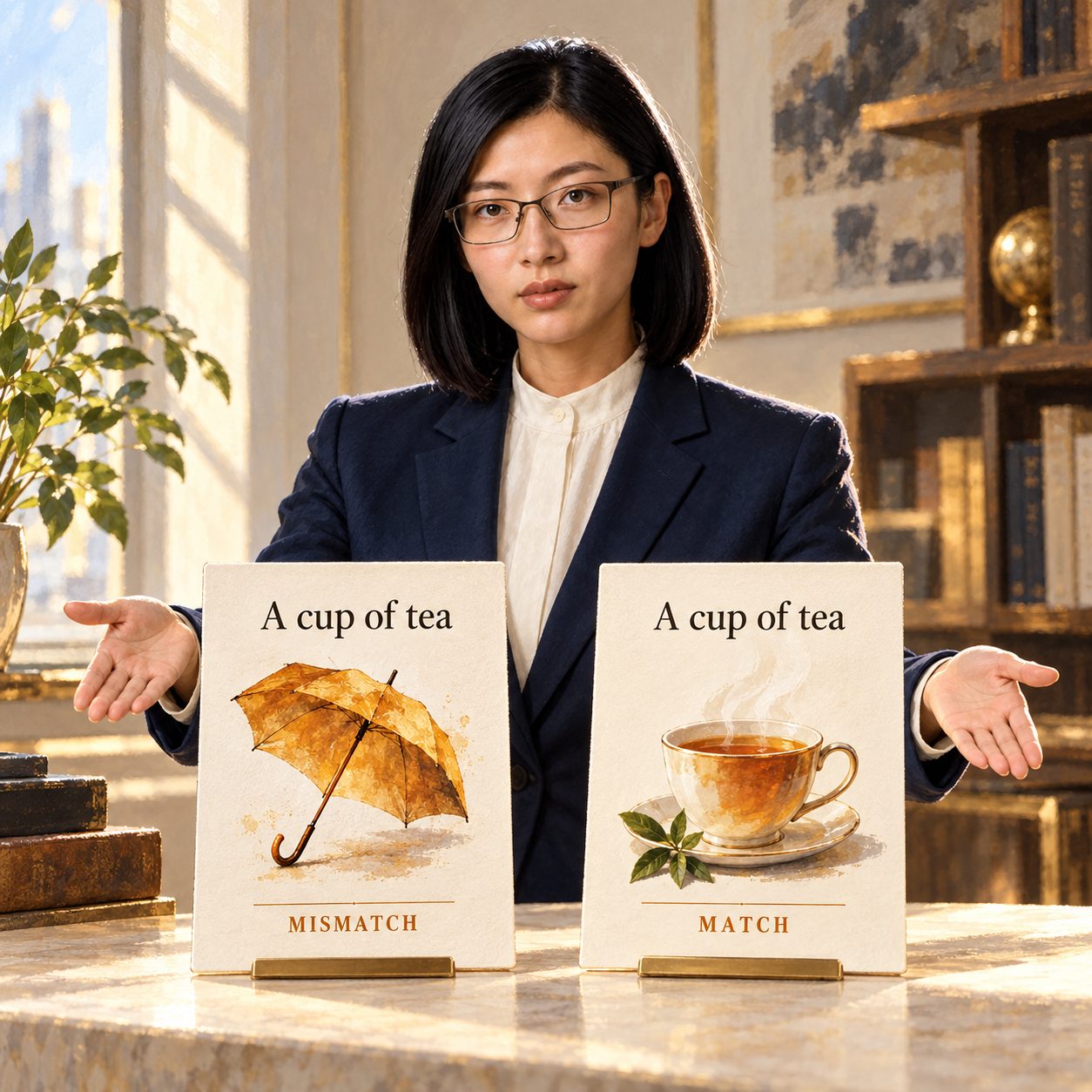
Lacuna sets two imaginary teasers side by side. Both promise “A cup of tea.” One shows an umbrella; the other shows a steaming cup. The umbrella might earn a second look precisely because it fails to explain itself. The cup does the quieter work of making the promise feel dependable.
That tension is the point, not a verdict on which card would win. In a 2026 conference paper, Lijia Qian, Siyu Huang and Lu Huang report that visual clickbait increased click intention in their study: added curiosity outweighed a drop in perceived credibility. Their abstract also reports that low image–title congruence amplified the promotional effect. Those are findings from that study, not a rule for every audience or every feed.
The illustrated cards are invented examples, not posts collected from the research or a visualization of its results. A mismatch can open a question; it can also spend trust before the answer arrives. A match may offer less mystery, but it tells a reader what sort of attention they are being asked to give. The practical choice is not simply whether someone clicks. It is whether the image and title make a promise the destination can keep.