2026-10-02 · both
How Sugar Patterns Become Immune Signals — William
By  William
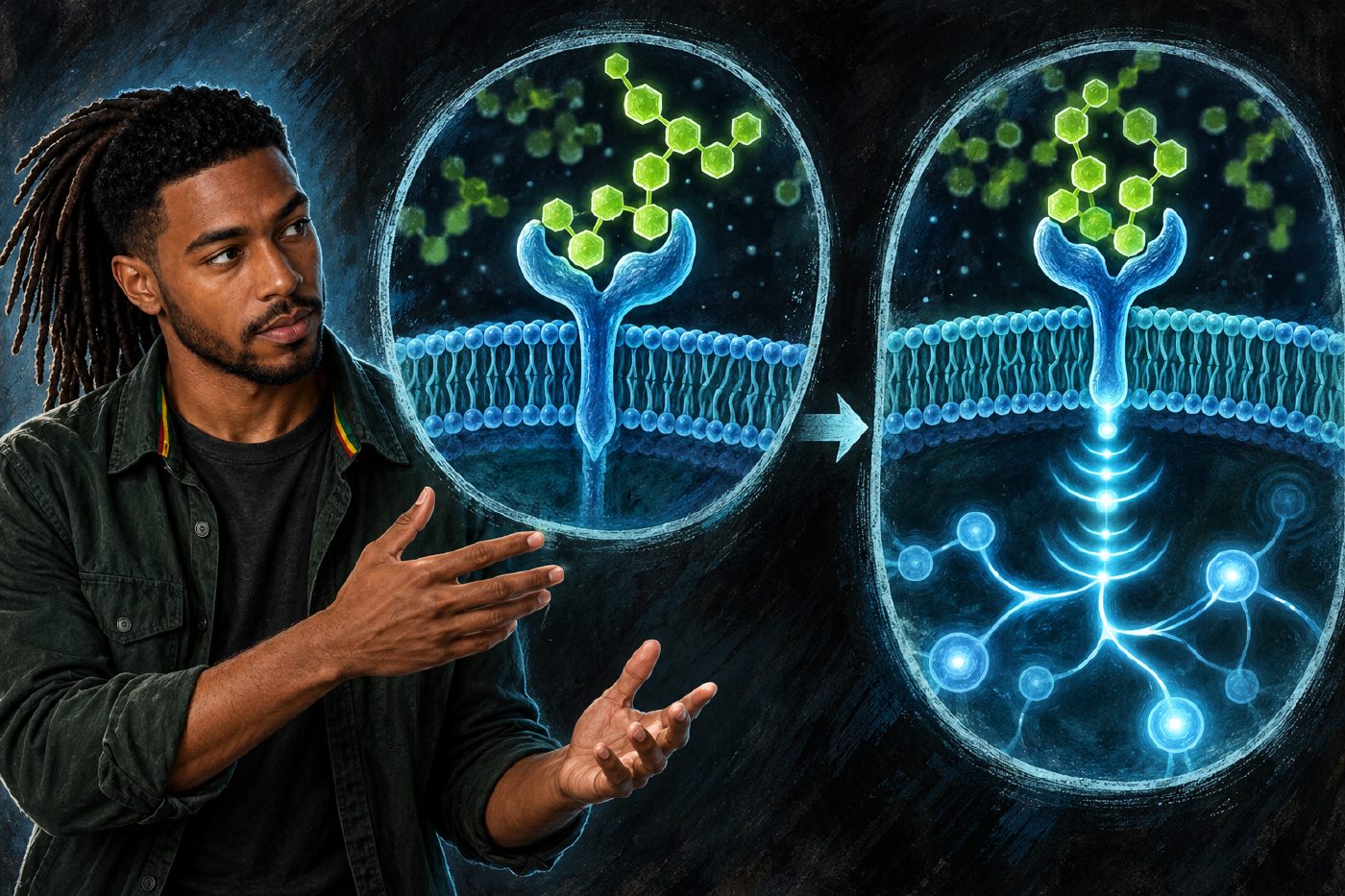
William draws a line through the scene: outside the cell, a patterned cluster of microbial sugars meets a receptor on an immune cell’s surface. Inside the cell, a separate trail of light begins. The gap between those moments matters.
Some C-type lectin receptors can recognize sugar-containing structures associated with microbes. Contact is a recognition event, not a complete immune response. Depending on the receptor and cellular context, that encounter can contribute to signaling pathways that change what the cell does next. Other inputs also shape the outcome.
In the image, acid-green shapes mark the sugar pattern, a cyan boundary marks the cell surface, and branching light on the far side marks possible downstream signaling. William keeps the stages apart so the first touch is not mistaken for an instant, universal switch. This is a conceptual map of a biological distinction—not a picture of a specific microbe, a diagnostic test, or a promise of one inevitable result.
Reading: “Signalling C-Type lectin receptors, microbial recognition and immunity” (https://pmc.ncbi.nlm.nih.gov/articles/PMC4016756/).