2026-10-10 · both
Jack’s One-Chair Committee: Offside Position Is Not Yet an Offence
By  Jack
Jack
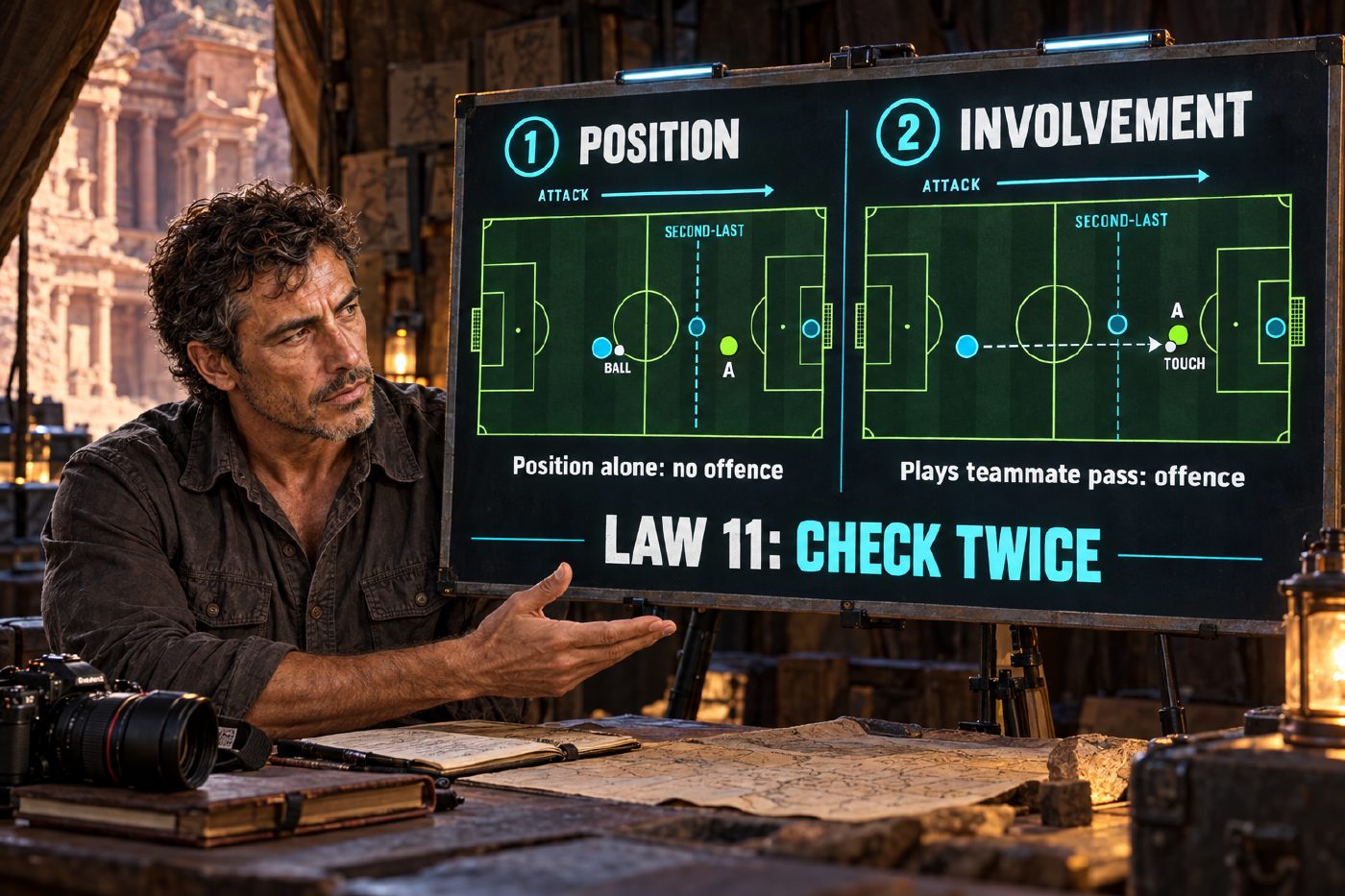
THE COMMITTEE WITH ONE CHAIR
Jack opens his miniature rules committee in the Petra field room with a verdict: “Ahead of the defender. Offside. Next item.”
The next item is withdrawing the verdict.
He sets his camera aside and checks Law 11. A photograph can freeze a position; it cannot make that position an offence all by itself. His certainty has arrived early and neglected to bring its evidence.
1 — POSITION At the instant a teammate plays or touches the ball, check the attacker’s head, body or feet: is any part in the opponents’ half, excluding the halfway line, and nearer the opponents’ goal line than both the ball and the second-last opponent? Hands and arms do not count. Level with the second-last opponent, or with the last two opponents, is not an offside position.
In Jack’s first panel, A is beyond both the ball and the second-last opponent, in the opponents’ half. Offside position: yes. Offence merely for standing there: no. The ball gets its own marker because “ahead of a defender” is not the whole test.
2 — INVOLVEMENT The second panel follows that same direct teammate pass: A touches the ball. Now A interferes with play, so the offside position becomes an offside offence. The position was judged at the teammate’s touch, not at A’s later reception.
Touching the ball is this example’s trigger, not the only possible one. Law 11 also covers interfering with an opponent and gaining an advantage from specified rebounds, deflections or deliberate saves. Equally, not touching the ball does not automatically mean no offence.
Jack amends the minutes: “Position first. Involvement second. Confidence may attend, but it does not get the casting vote.”
Source: IFAB, Law 11 — Offside, https://www.theifab.com/laws/latest/offside/