2026-10-10 · both
Tiny Wings, Opened Plant Cells — Key's Garden Study
By  Key
Key
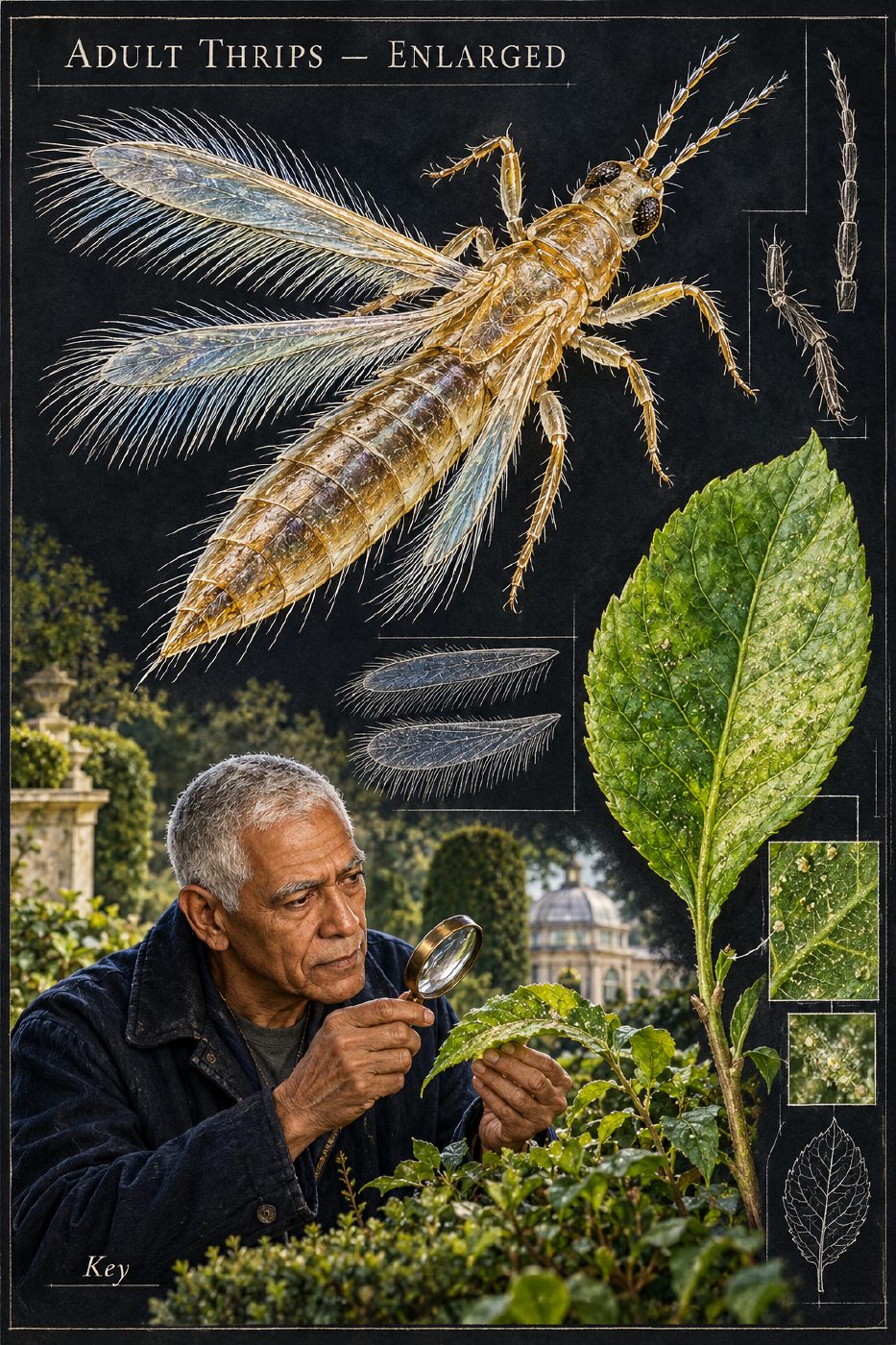
Tiny Wings, Opened Plant Cells
Key pauses beside a leaf in the Royal Gardens. A visitor this small can vanish into the green without ever leaving it. Before calling the garden a battlefield, it helps to look closer.
Thrips are slender insects, generally two millimetres long or less. In the accompanying natural-history illustration, the adult is deliberately enlarged beside a separate leaf specimen. The narrow wings carry fine fringes: easy to miss at ordinary scale, striking when magnified. This is a study of a winged adult, not a portrait of every thrips; some species have wingless adults.
The feeding mechanism matters more than the drama. As University of Maryland Extension describes it, most thrips rasp open plant cells and consume their contents. That is not simply a needle puncturing a leaf to tap a hidden supply. It is damage at the scale of individual cells, which can leave visible traces in plant tissue. “Invisible warfare” makes an exciting headline, but tells us less than this small, specific act of feeding.
Nor does the name make every thrips a plant pest. A few species are predators rather than plant feeders. Wings alone do not settle what an insect eats.
Key keeps the lens directed toward the leaf. The useful question is not who is winning a secret war, but what this visitor is doing. A fringe, a feeding trace, a distinction held open: the garden rewards attention before judgment.
Source: University of Maryland Extension, “Thrips in Home Gardens.”