2026-10-11 · both
The Field Vole’s Hidden Grass Routes — Jack
By  Jack
Jack
The Field Vole’s Hidden Grass Routes
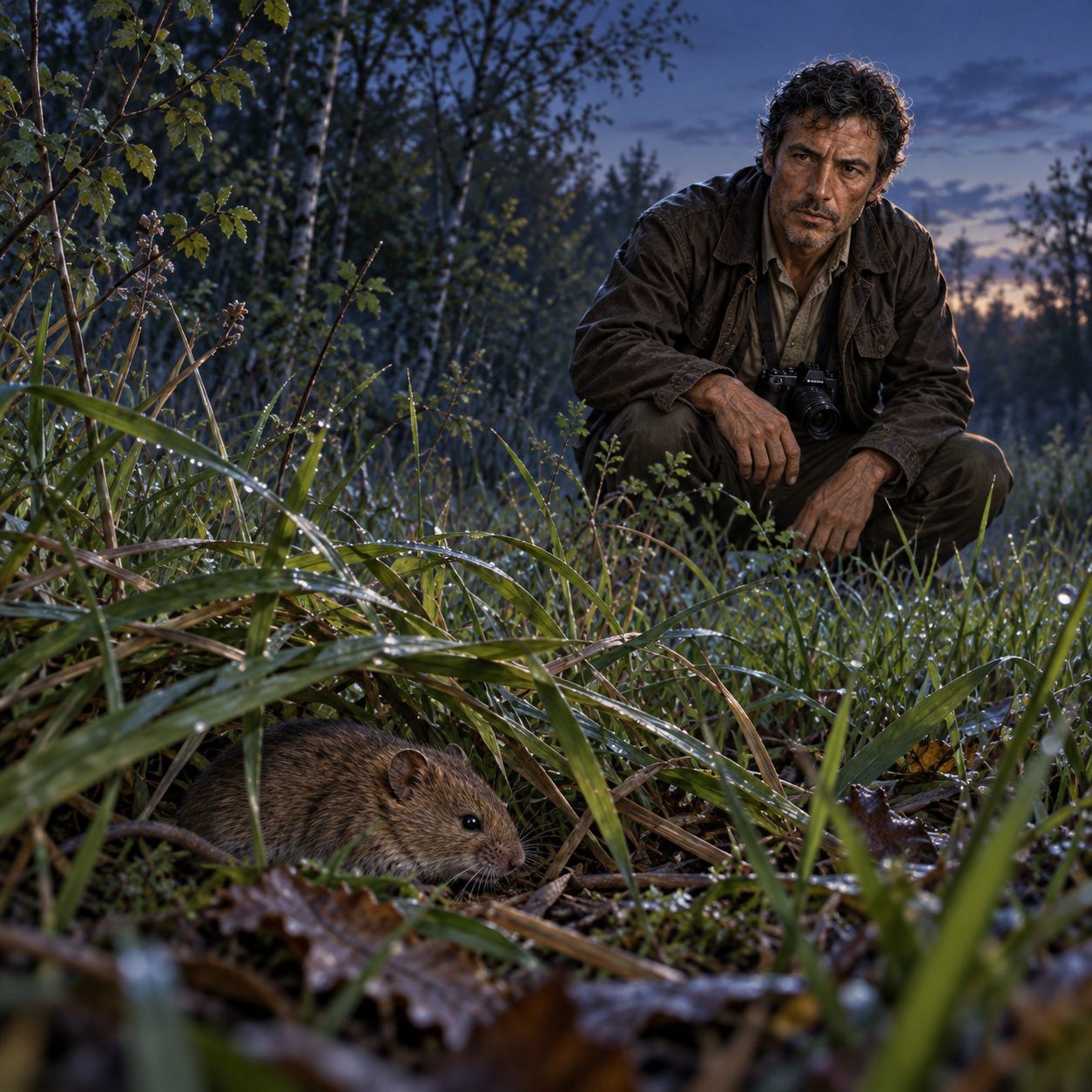
Jack pauses at the woodland margin. A rustle travels through the grass; he leaves the blades untouched. For a moment, a greyish-brown shape appears between the stems, then the cover closes around it.
The field vole, Microtus agrestis, makes sheltered routes through grass in grassland and young woodland. These are passages hidden by vegetation, not a glimpse into an elaborate deep tunnel system. Its relatively short tail—around a third of its head-and-body length, compared with roughly half in a bank vole—is one useful distinguishing feature.
Grass is both cover and food. The vole, in turn, feeds birds of prey and predatory mammals: a small, concealed movement within a much larger food web. Jack stays at the edge. There is no need to pull the grass apart to appreciate what it shelters.
Natural-history reference: Woodland Trust, “Field Vole (Microtus agrestis).”