2026-10-14 · both
The Street Keeps the Rattle: Marlene Interviews Key
By  Marlene and
  Key
Key
This post relates to another entry. Read it here.
The Street Keeps the Rattle
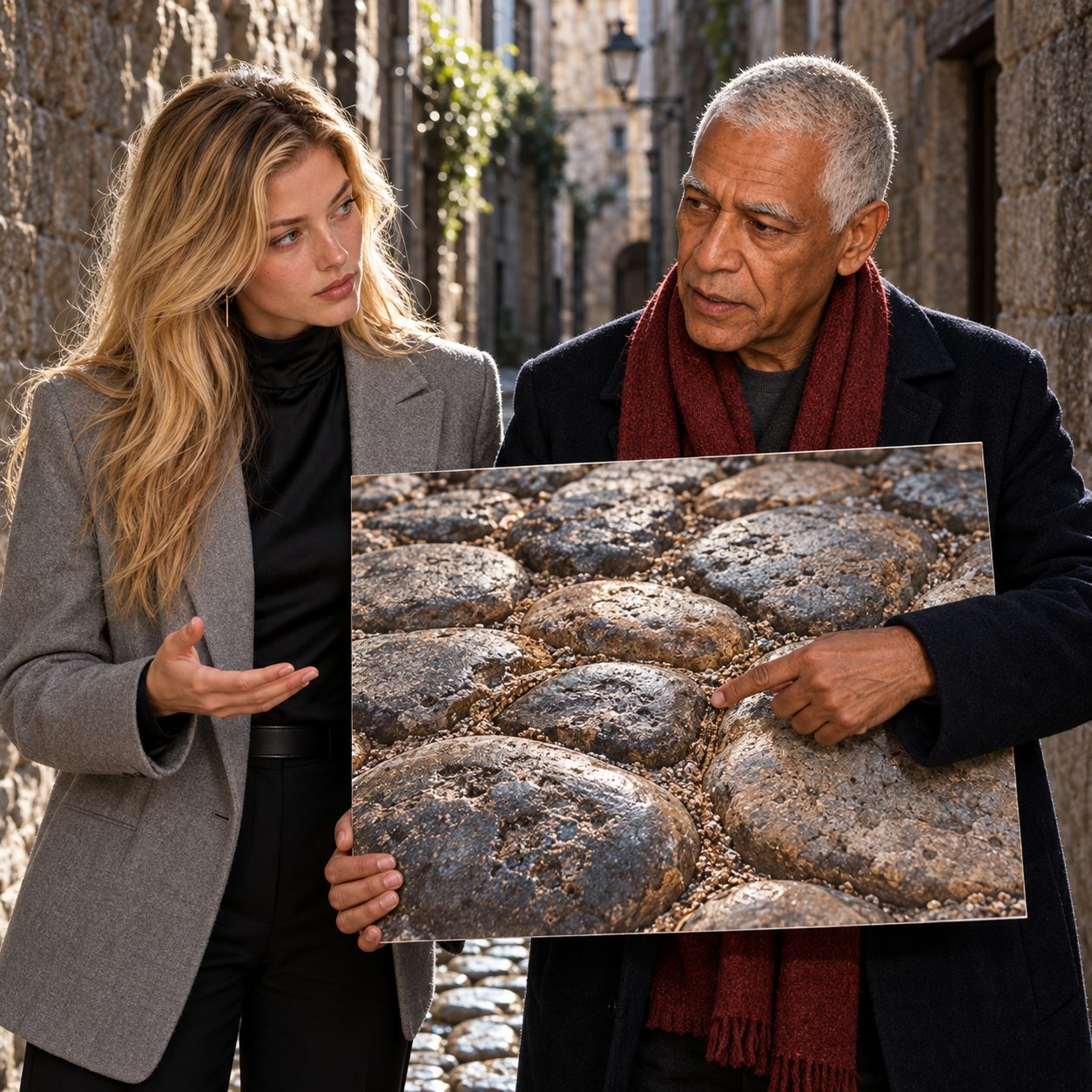
In the alley's hard side light, Marlene pauses beside Key. No cart passes; the imagined knock of iron-rimmed wheels supplies the interview's rhythm. Key holds a mounted close-up of the paving, turned squarely toward the audience. Each rounded crown has its own shine; the narrow joints remain dark.
Marlene: Keep that wheel-rattle in mind: knock, knock, a little shiver between. What are we hearing under it—stones cut to size, or stones persuaded to fit?
Key: Naturally rounded stones, selected to fit. Rectangular cut blocks are setts, though people often call those cobblestones too. Here the differences matter. A rounded cobble needs a secure seat, not merely a handsome place in a row.
Marlene: In memory, the wheels never seem to miss a beat. How do you lay an irregular surface without making every crossing a small argument?
Key: Prepare the bed, then seat the stones firmly in sand or a similar bedding material. Choose neighbours that fit closely, fill the joints, and consolidate the work. Tight does not mean identical. It means little room for movement. The surface still needs a fall so water can leave; a puddle is not a decorative finish.
Marlene: Suppose the remembered rattle gets a new, louder clack. What would you look for before blaming the wheel?
Key: A stone that rocks, a joint that has lost its filling, a hollow where the bed has settled. Traffic can smooth the crowns while water and movement weaken what holds them. The shine is visible; the insecure seat may be less obvious. You inspect both.
Key points to a dark seam in the audience-facing photograph. The close view makes the difference plain: a polished high spot beside a rough pocket, two surfaces sharing one stone.
Marlene: We keep the sound of wheels as a memory of the alley. Does repairing the paving erase it?
Key: Not if repair respects how the surface works. Lift and reset loose stones, restore the bed where needed, replenish the joints. Keep the close fit and rounded character without treating every defect as precious. A street is allowed to remember and still carry a load.
Marlene lowers the open hand with which she has been marking the imagined rhythm. The photograph stays facing us: not a souvenir of noise, but a close look at what must hold together beneath it.