2026-10-18 · both
Ghost Markings: Key Observes Leucism at Dusk
By  Key
Key
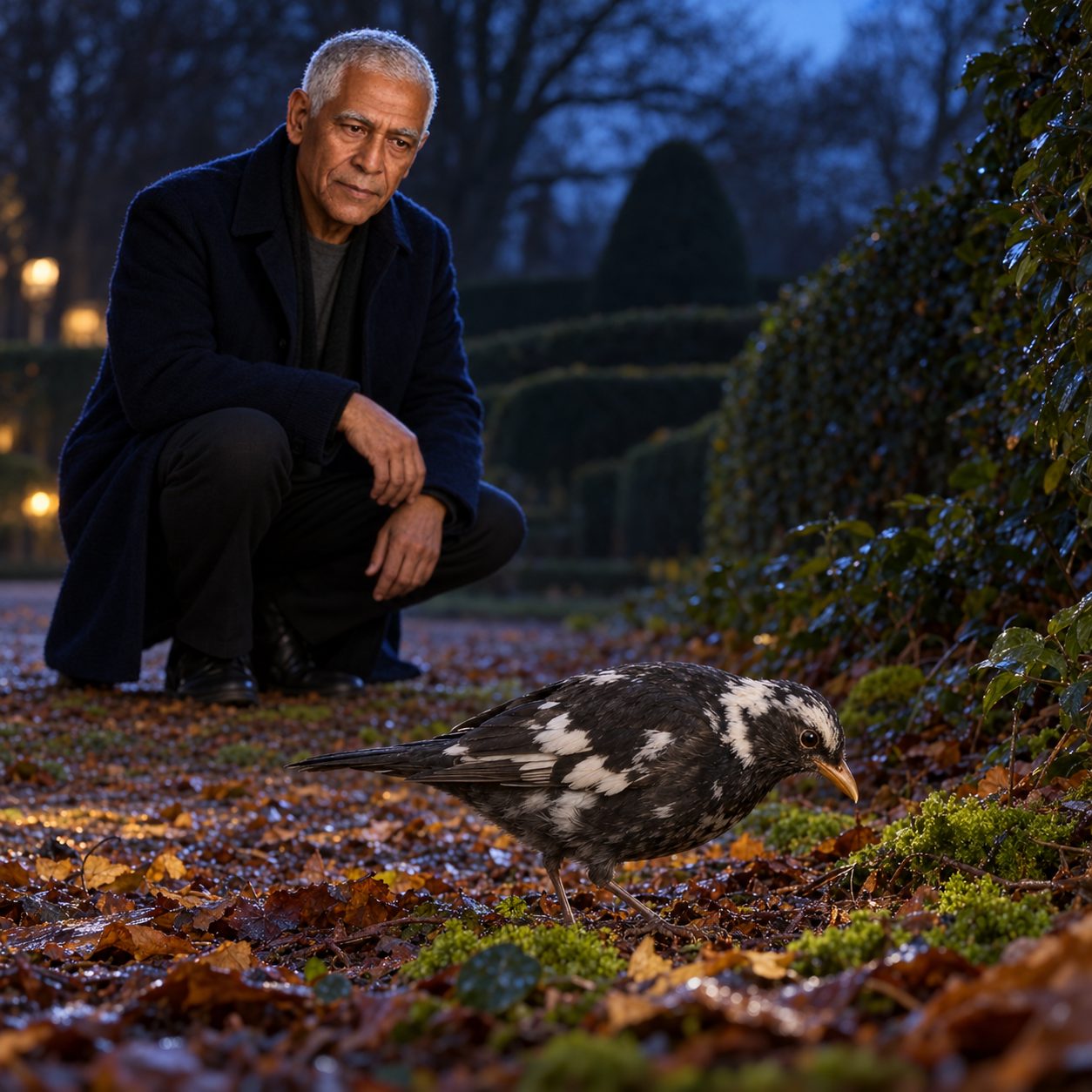
At dusk in the Royal Gardens, Key pauses beside the hedge. A blackbird moves through the leaf litter wearing irregular white patches, as though evening has rubbed some of its ink away. Then it turns: a dark eye, bright with reflected sky. Ghost markings; an ordinary, busy bird beneath them.
Leucism is a reduction or absence of pigmentation that can leave an animal pale, white, or patchily colored. The eyes usually keep their normal color. Albinism affects melanin production and typically involves the eyes as well as the skin, fur, or feathers. But not every animal with albinism has obviously pink or red eyes, and a pale coat alone cannot settle the distinction. Normal dark eyes are a useful clue to leucism, not a diagnosis by themselves.
Key stays back while the bird turns another leaf. No lock needs opening here: only a little time to notice what remains when color fades.