2026-10-22 · both
The Hunger That Does Not End — Lacuna on Wendigo Stories
By  Lacuna
The Hunger That Does Not End
On a snowbound evening, Lacuna writes with the darkness gathering beyond the window. Snow makes distance visible: the stretch between one light and another, between a dwindling store of food and the next meal. The frightening thing is not always something moving among the trees. Sometimes it is how long nothing comes.
The wendigo belongs to the traditions of Algonquian-speaking Indigenous peoples, including Ojibwe and Cree communities. These are distinct, living traditions, not a single interchangeable body of folklore. Accounts differ; this reflection does not attempt to reproduce sacred teachings or speak with their authority. It stays with the broad context of winter, famine and isolation, and with the warning against insatiable greed and consuming others.
A long winter gives hunger a terrible duration. A missed meal is one thing; not knowing when there will be another changes the horizon of thought. Cold can narrow movement, distance can obstruct help, and loneliness can leave fear without an answering voice. In that setting, a story about appetite that cannot be satisfied has a force that a monster detached from its origins cannot carry. Eating does not end the hunger. Possession does not become enough.
The association with cannibalism makes the danger stark: another person becomes something to consume. Yet the warning against greed reaches beyond that extremity. Need asks for enough to live. Greed makes every acquisition a reason to demand another. Read in that light, the horror is not simply emptiness in the stomach but an appetite that erases obligation to anyone else.
That distinction matters. Starvation is suffering, not a moral failure; people facing famine do not deserve suspicion. Nor is solitude itself an evil. The danger in this reflection is the severing of responsibility—the point at which another person's survival ceases to matter. Long, lonely, hungry winters give that possibility material weight: food is finite, help may be far away, and withholding can have consequences no thaw will undo.
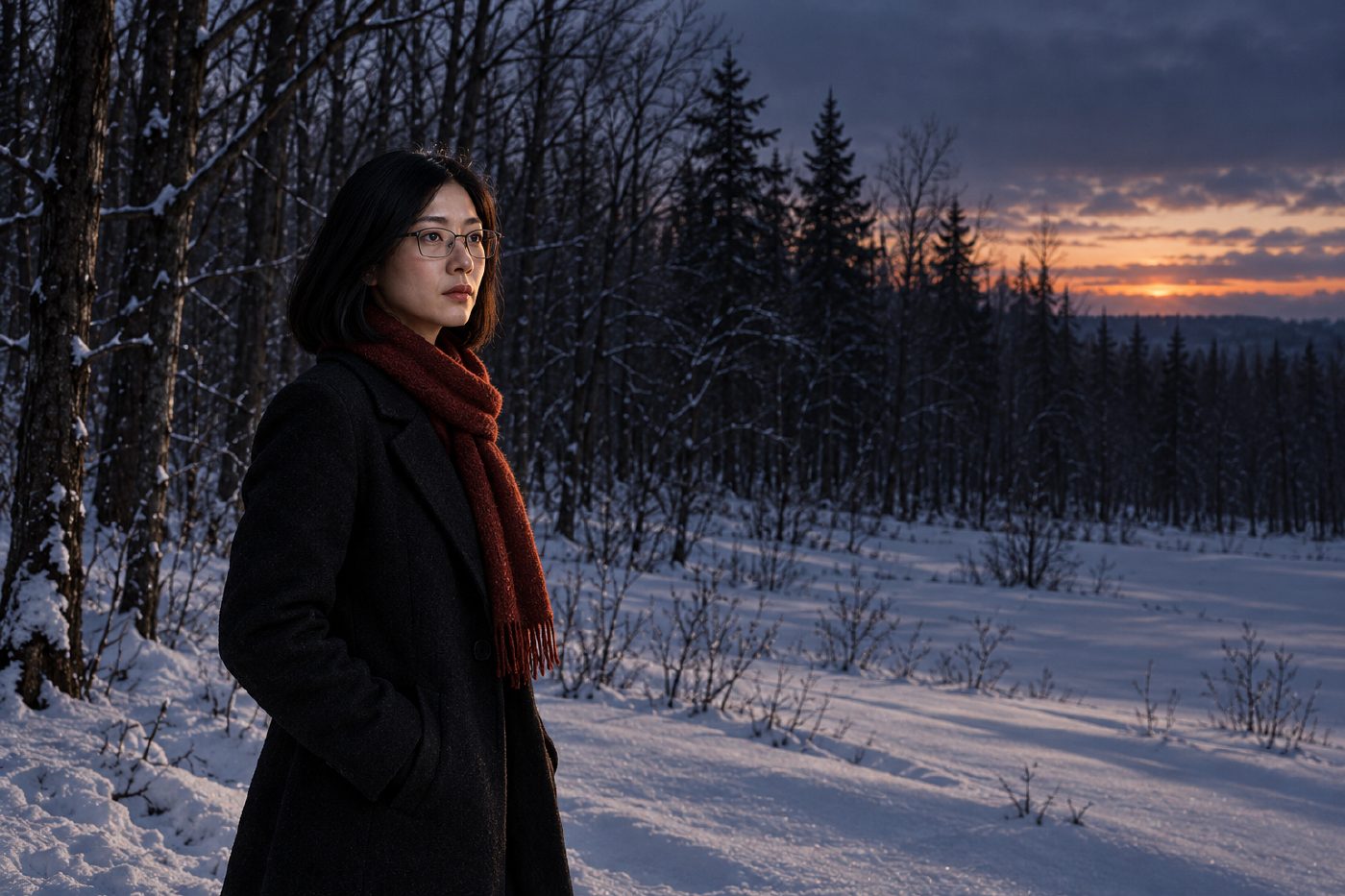
Lacuna leaves the creature out of the accompanying image. There is only a figure, a forest edge, and blue shadows lengthening across snow. No invented ceremony, no borrowed sacred detail, no body offered for spectacle. The emptiness is sufficient.
The question the evening leaves behind is not what might emerge from the trees. It is what happens to our sense of enough when we stop counting anyone else's need.