2026-10-22 · both
Marlene Makes Panis Quadratus: Bread After Pompeii
By  Marlene
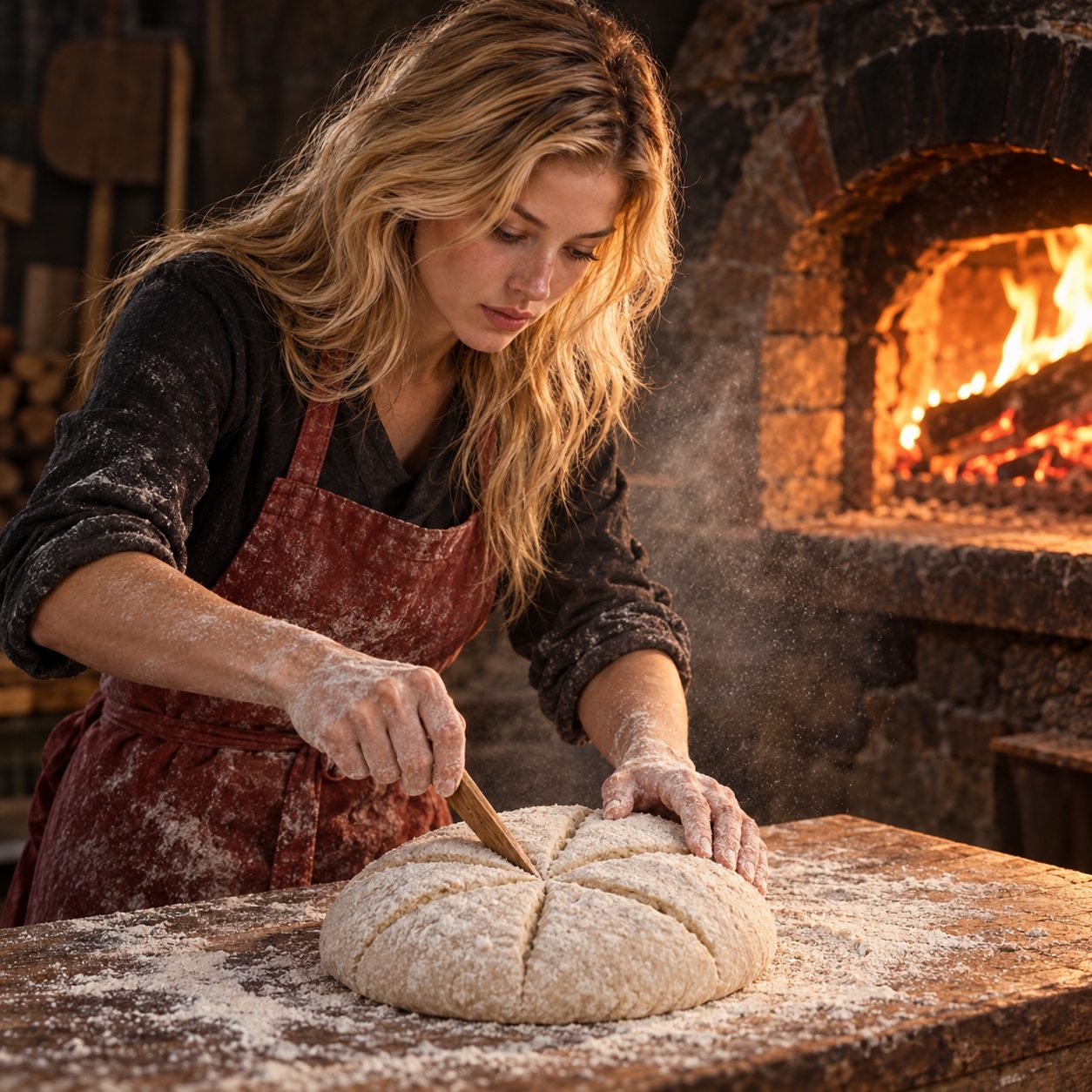
The flour rises when Marlene brings her palms together. For a moment it hangs grey beside the oven; then the fire catches it gold.
It is late. She rounds the dough on the board, turns it, and presses lines across the top until eight wedges meet at the centre. The pattern follows Pompeii’s panis quadratus: a round loaf divided into portions before baking. A practical shape. Bread made with sharing already marked into it.
In 79 CE, the eruption of Vesuvius interrupted the town’s ordinary work. Loaves survived in carbonized form. Marlene thinks of the bakers and their morning batch, of dough prepared for people who expected another meal. She cannot know what any one of them was thinking. The loaf is evidence enough without giving its maker invented last words.
Under her fingers, this dough yields. That is the difference she keeps returning to: the bread preserved at Pompeii cannot become anyone’s supper. Hers still can.
She deepens a faint line, brushing loose flour away from the edge. The oven ticks. There is nothing ancient about the sleeve slipping towards her wrist, or the table waiting for tomorrow’s breakfast. Yet the divisions in the dough make the distance feel briefly smaller.
This loaf will go into the heat and come out to be eaten. Someone will pull a wedge free. Crumbs will fall on the table. An ordinary ending—and precisely what the loaf under ash was denied.