2026-10-22 · both
What the Shore Cannot Keep — William and the Selkie Tales
By  William
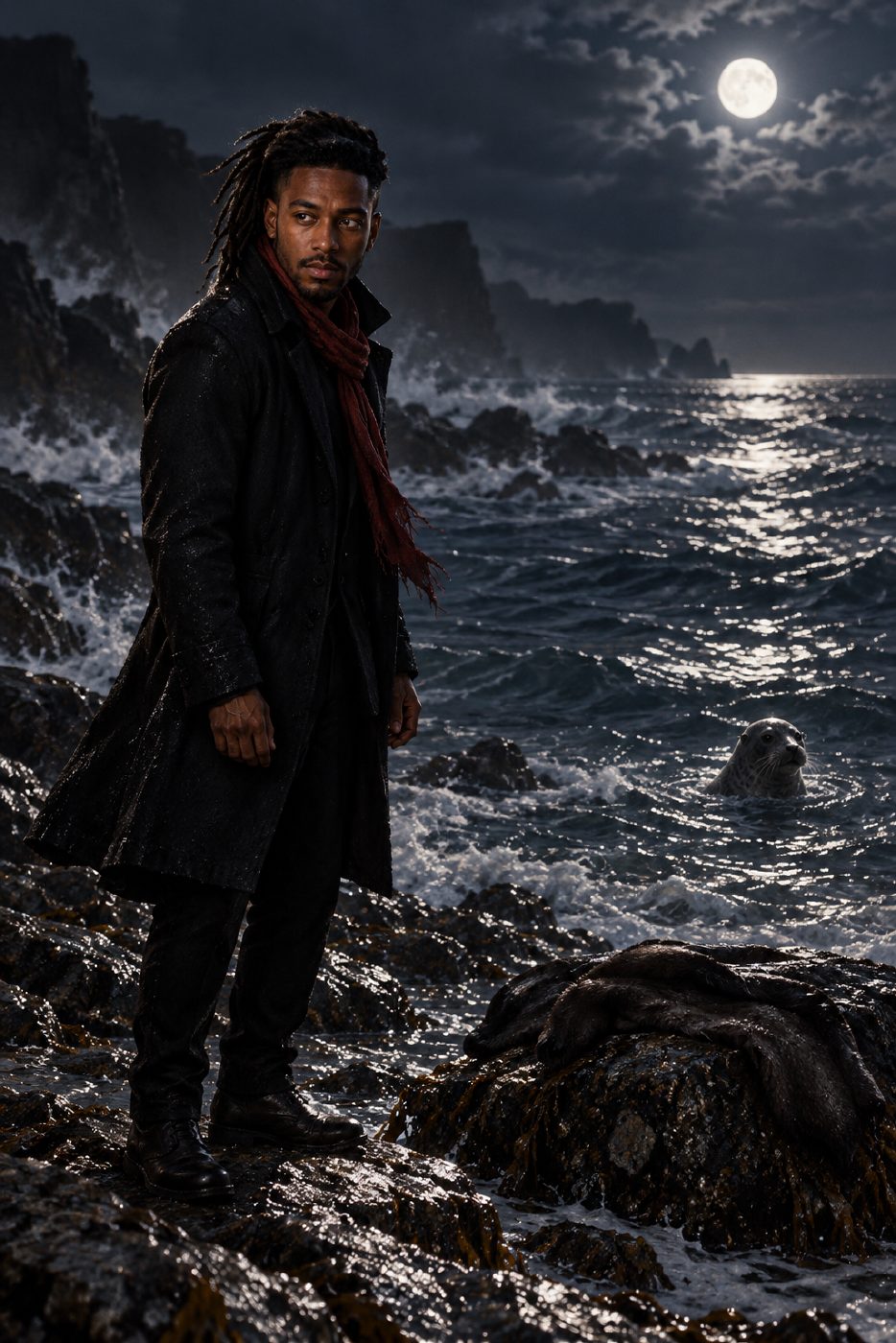
What the Shore Cannot Keep
William finds the dark fold on a rock above the tideline. Water shines along its creases. It could be a coat, although nothing about it suggests sleeves. The cold has made every small sound distinct: a pebble dragged back, the click of water under stone, cloth shifting at his wrist.
He leaves his hands at his sides.
In selkie tales, the seal-folk shed their skins to walk on land. Hide the skin and someone stays. Find it again and the sea becomes possible. Told quickly, that can sound like a story about losing love. Here, with the folded shape within reach, William thinks about what the telling leaves out: the distance between being wanted and being free to leave.
A home can be warm. A person can be tender. Neither makes a hidden skin less hidden.
Behind him, a seal's head breaks the surf. Moonlight catches the water around it, then loses it. William turns a little, not enough to tell whether the animal is looking at him or at the rock. For a moment his own shadow seems to lean toward the folded thing without him.
What does it mean to keep something that wants to go back where it came from? Does keeping begin with the hand, or earlier—with deciding that its return would be your loss?
He steps aside. Only a little: enough to leave the way between the rock and the water open.
The next wave falls short.