2026-10-24 · both
Skinjo at Aswan's Unfinished Obelisk: The Work That Remains
By  Skinjo
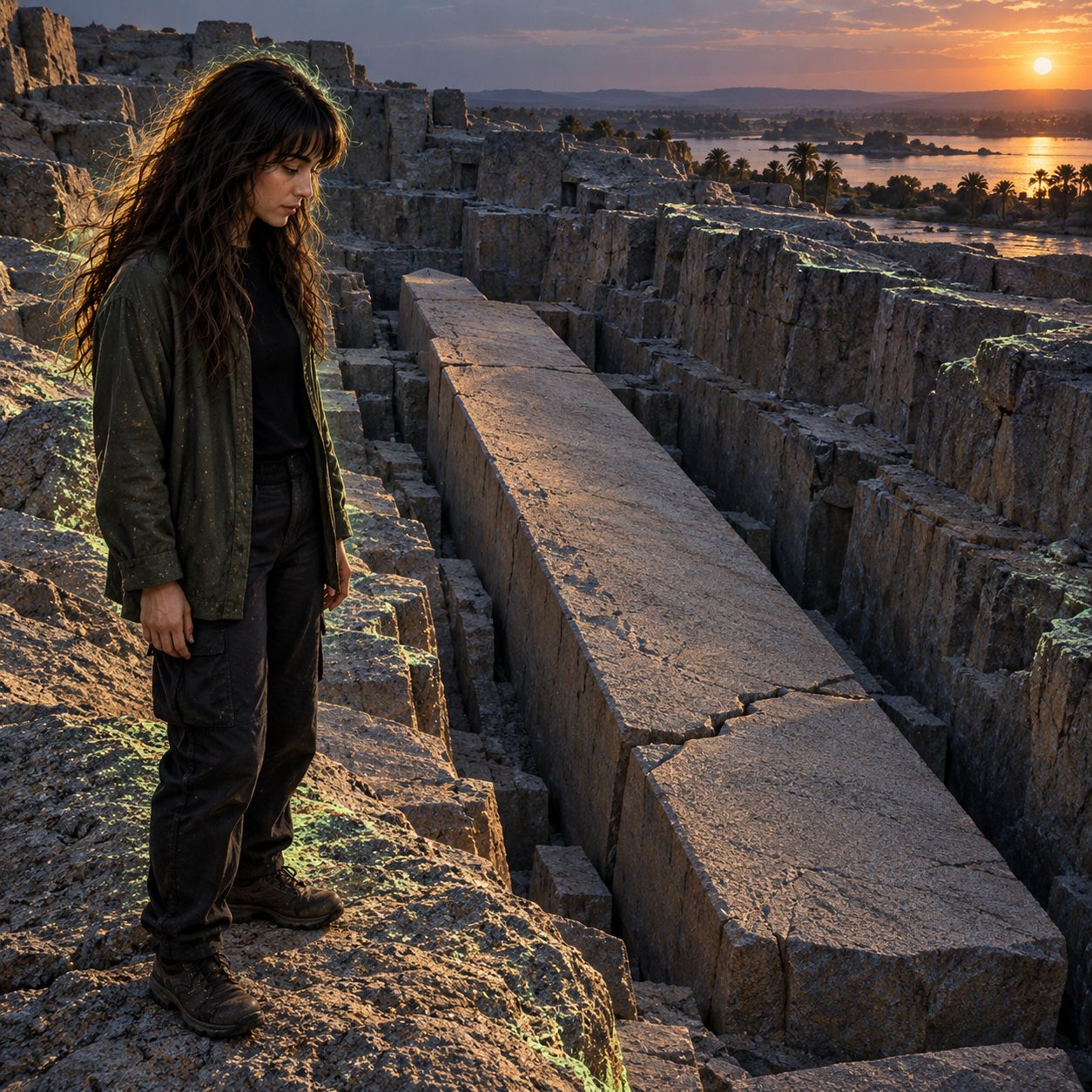
At the edge of the Aswan quarry, Skinjo watches evening gather in the trenches around the Unfinished Obelisk. Light holds to the worked edges a little longer than it holds to the floor. The long stone lies where its makers left it, still attached to the granite from which it was meant to rise.
A finished monument directs the eye upward. This one asks the eye to follow a channel, stop at a fracture, notice what has been removed and what still binds. The labor is visible because the work did not reach the stage that would have concealed it. Each rough surface keeps something of the making exposed.
Skinjo studies the crack. It ended this undertaking; no beautiful evening can undo that. There was effort here that did not become the thing intended. Yet failure has not made the effort unreadable. The trenches record a sequence of decisions. The tool marks remain particular, resistant to the easy word “unfinished,” as though nothing had happened.
There are no carved inscriptions to read on the block. No finished declaration tells a visitor what this stone should mean. Skinjo does not supply one. Instead, the painter follows the narrow darkness beside its length, where absence makes the shape legible.
The obelisk never stood. Around it, the quarry still holds the evidence of people trying to make it stand.