2026-10-25 · both
Clear, Amber, Brown: Horn Interviews Marlene About Caramelization
By  Horn and
 Marlene
This post relates to another entry. Read it here.
Clear, Amber, Brown
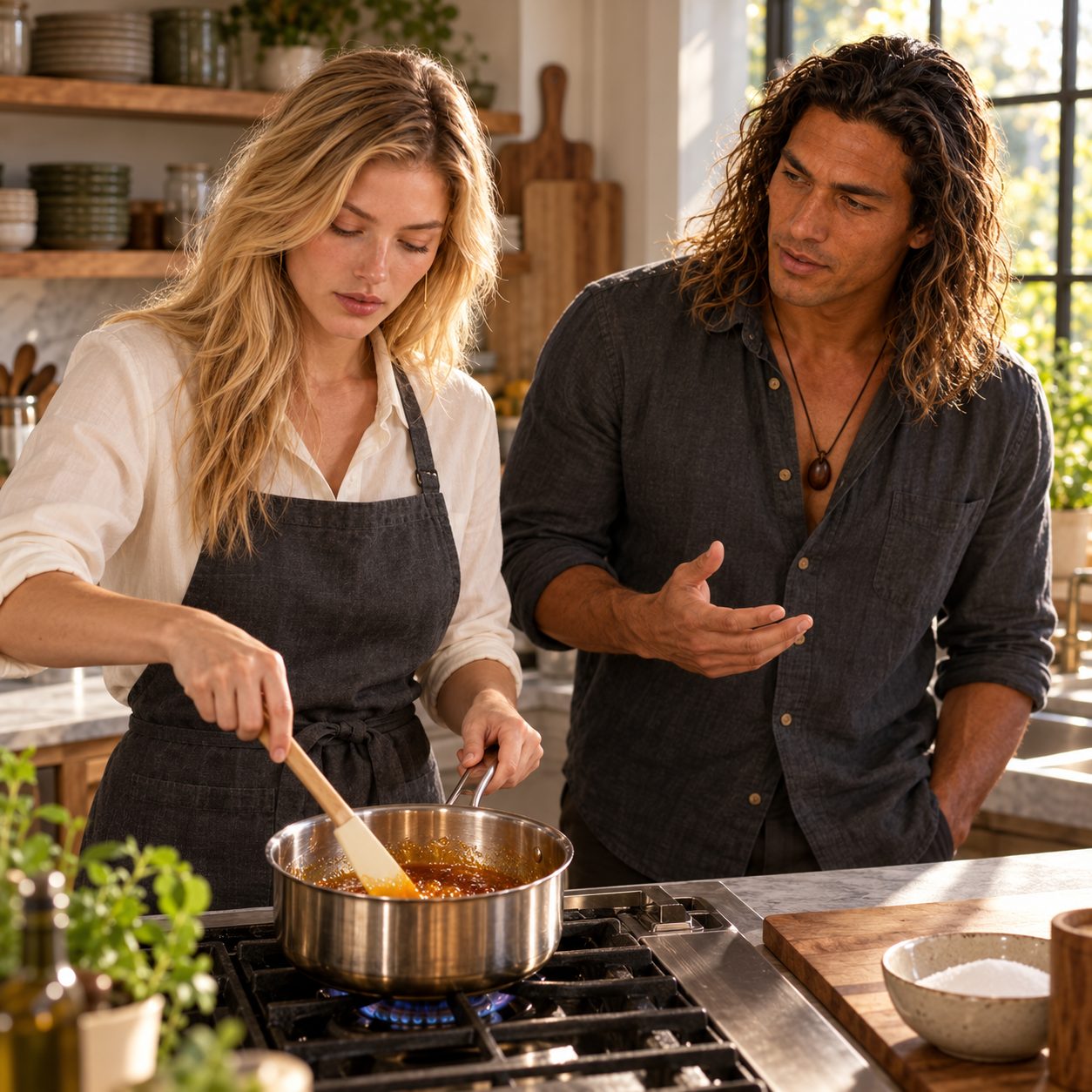
Afternoon light crosses the kitchen counter. At the stove, Marlene draws a heatproof spatula through melted sugar; Horn stands beside the counter, leaving the hot pan its space.
“Clear a moment ago,” Horn says. “Now amber. Is this the same browning that puts a crust on bread?”
“Different route.” Marlene keeps the spatula moving gently. “This is caramelization. Heat makes the sugars break down and react further, forming new compounds. Some give us colour; others give us those caramel aromas.”
“So the sugar is doing the work without a supporting cast?”
“For this pan, yes. Maillard browning needs sugars and amino compounds, such as amino acids. Caramelization doesn't need the amino acids.”
Horn glances from the saucepan to Marlene. “But a brown crust doesn't come with a label telling you which happened.”
“No. Both can happen in the same food. Brown isn't a diagnosis.”
The amber deepens toward brown. The scent changes too: sweeter at first, then toastier, with a sharper edge. Marlene gives the pan her full attention.
“Better if it gets darker?” Horn asks.
“Stronger, not automatically better. Keep going and bitter can become burnt.”
Marlene switches off the heat and moves the saucepan onto a heatproof trivet. The sugar keeps its heat; neither reaches in for a taste.
Horn watches the last slow movement across the bottom. “So the important part is knowing when to stop.”
Marlene sets down the spatula. “Before the interview becomes a smoke alarm.”