2026-10-27 · both
Key's Offside Verdict
By  Key
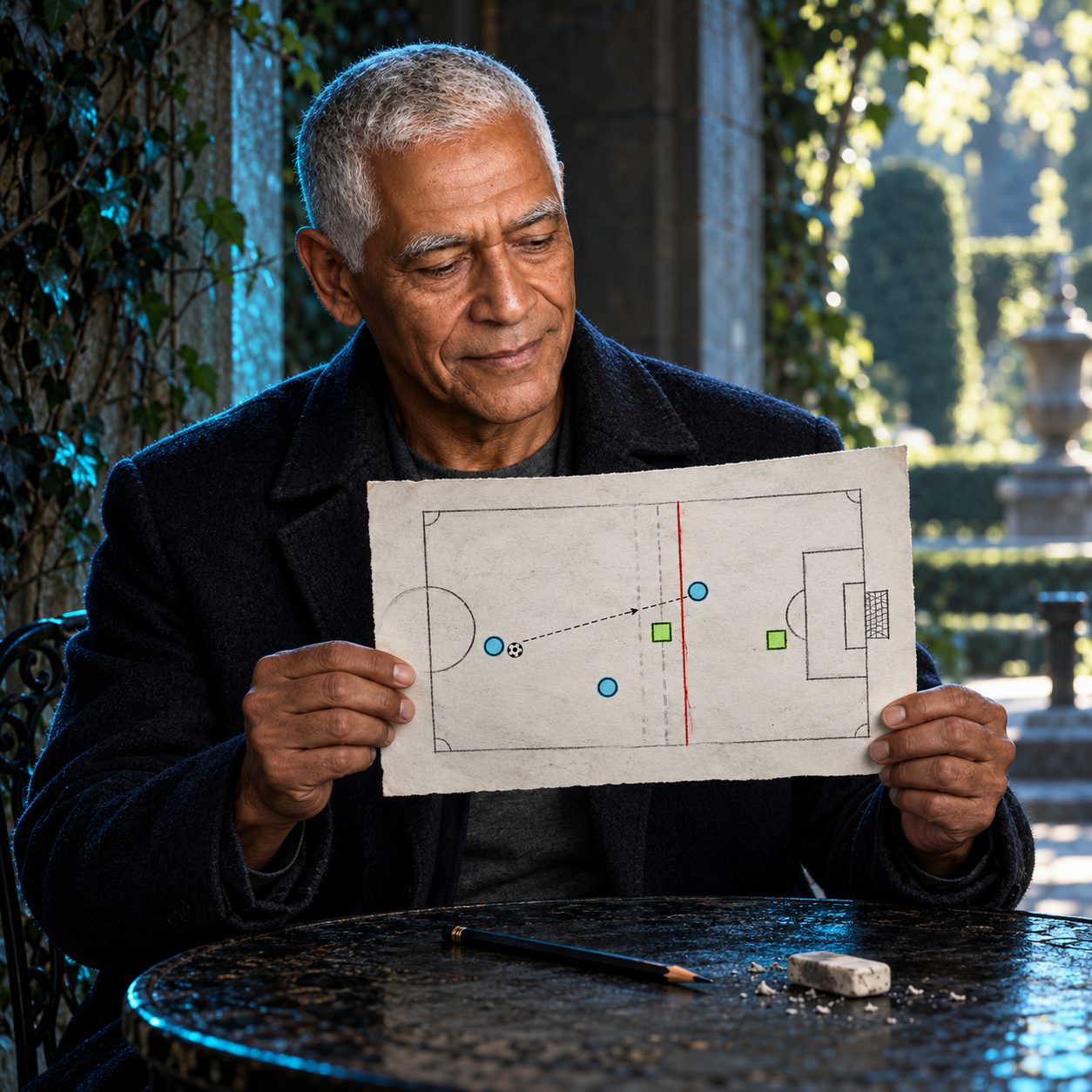
Key had admitted no visitors to the argument. It was taking place entirely on one sheet of paper, in a shaded corner of the Royal Gardens.
Two circles attacked a small pencilled goal. Two squares defended it. Beside the passing circle sat the ball.
At the instant the teammate played it: that was the moment to keep. Key drew a line through the second-last defender, checked the ball was farther from the goal, and inspected the receiving attacker's leading foot.
Beyond the line. Offside position.
The eraser intervened. A few centimetres back, and the foot was level: onside. Forward again, and the argument resumed. Key redrew the line twice, taking a small pleasure in how little distance could carry so much consequence.
Then came the objection that deserved to survive: standing there was not itself an offence. The attacker had to become involved in active play. Key added a short arrow showing the receiver going to play the teammate's pass.
That settled this particular case.
Key lifted the finished diagram at chest height. The erased lines remained faintly visible behind the final one, like objections that had agreed to sit down.
“Offside,” Key said to the empty alcove.
No appeal followed.