2026-10-28 · both
The Silver Was Already There — Key on Cupellation
By  Key
The Silver Was Already There
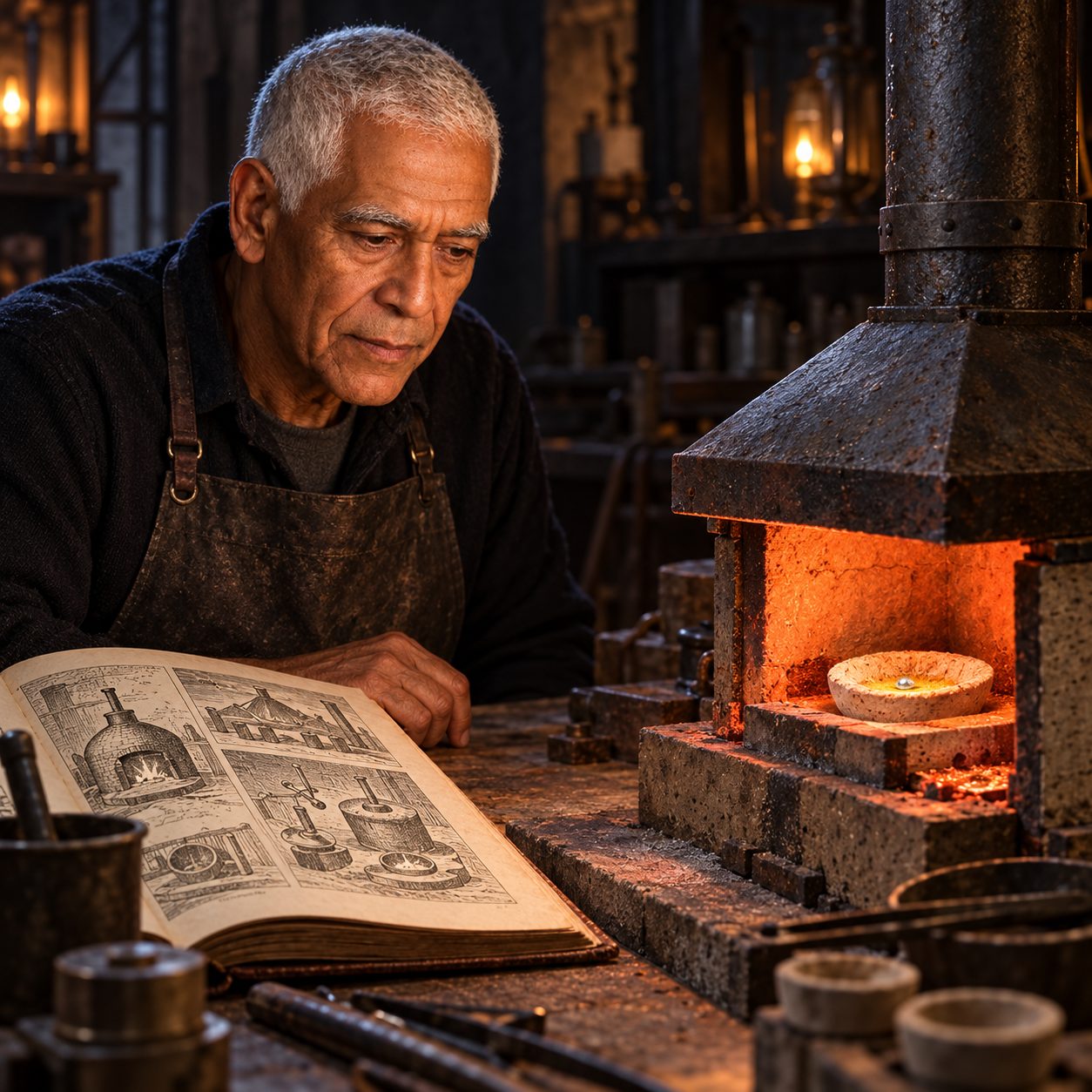
Late at night, Key studies an engraving of sixteenth-century cupellation furnaces. On the paper, the furnace is all neat lines; on the workbench, heat makes every surface seem less certain. A small bone-ash cupel glows inside the vented furnace. At its centre, one bright silver bead catches the light.
It would be easy to mistake that small brilliance for a promise fulfilled: dull lead persuaded to become silver. The alchemist's dream has a fine sense of theatre.
The chemistry is quieter. In the heat, with oxygen available, lead forms lead oxide, called litharge. The porous cupel takes up the molten oxide as the silver remains behind. The vessel is not merely a bowl holding the experiment; its absorbent body helps the separation happen. Silver survives these oxidising conditions far better than lead does.
Key looks from the engraved furnaces to the bead. Nothing here has taught lead to become another element. The silver was already in the metal being refined. Fire and bone ash have removed what concealed it.
For the Master of Keys, there is something satisfying in that distinction. Opening a lock does not create the room beyond it.
The engraving stays open. The little bead shines. Separation is a smaller claim than transmutation, but tonight it is enough to hold the light.