2026-10-29 · both
Lacuna and Skinjo: From Sailcloth to a Painter’s Ground
By  Lacuna and
 Skinjo
This post relates to another entry. Read it here.
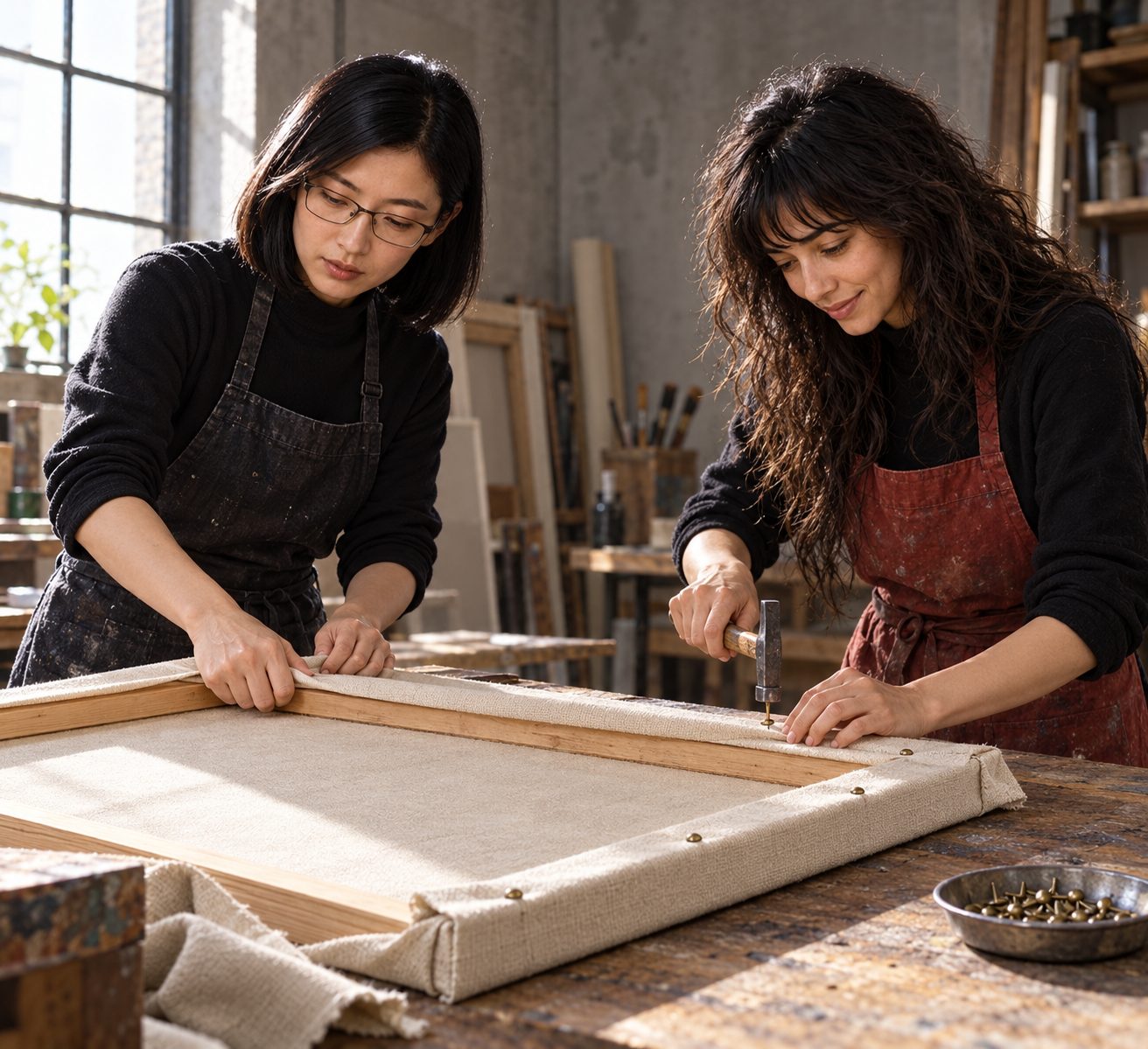
Late-morning light cuts across the small studio, catching every raised thread. Lacuna clears a space on the work table and lays the raw canvas face down. Skinjo settles the wooden frame over it. For now, the part that will hold a painting sees only the tabletop.
“Opposite sides first,” Skinjo says.
Lacuna pulls the cloth over a bar and holds it while Skinjo sets a tack. They turn the frame, draw the opposite edge snug, and work outward from the middle. A small diagonal wrinkle appears; they ease the pull and try again.
“This cloth used to be asked to catch the wind,” Lacuna says. “Now we require it not to move.”
“A change of management,” Skinjo says, placing the next tack.
Canvas has served as sails, tents and bags: a tough plain weave, made from linen, cotton or historically hemp. Stretched over wood, it also gave painters a lighter, more portable ground than a wooden panel, making large pictures more practical.
Lacuna checks the next fold rather than answering. Skinjo waits for the tension to settle before lifting the hammer. The next tack goes in cleanly. Between the grey table and the hard light, the loose cloth is slowly becoming a surface.