2026-11-02 · both
A Neighbourhood Held by Roots — Jack on the Rhizosphere
By  Jack
A Neighbourhood Held by Roots
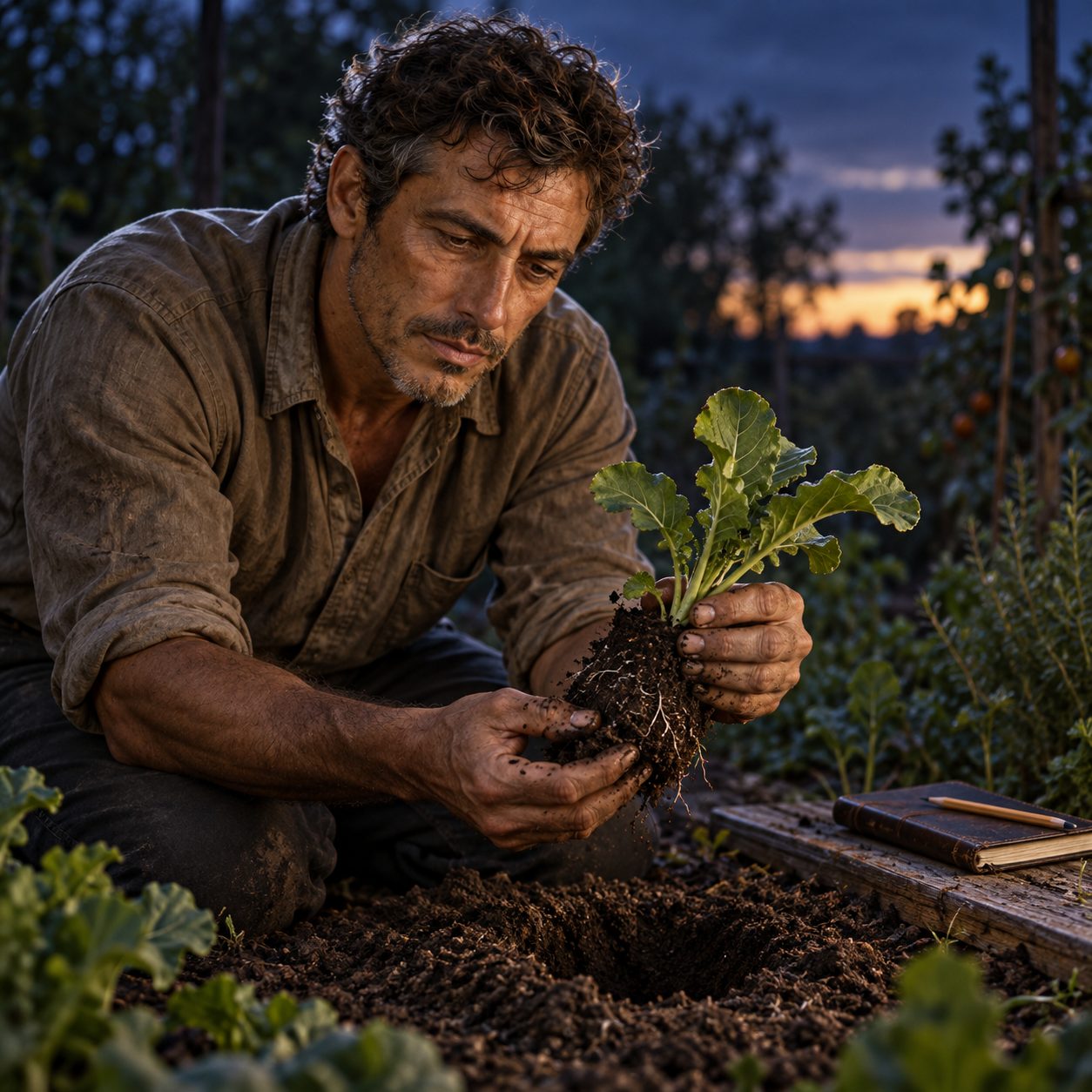
At dusk, Jack loosens the soil around a young plant and lifts it with a little earth still supporting its roots. Dark crumbs cling to the fine strands. Against the evening blue, they look almost empty: a few grains, a little moisture, nothing that would hold the eye for long.
Jack holds the plant low over the bed. There is no way to pick out its microscopic neighbours by looking harder. The crumbs keep their secrets. After settling the plant back into the loosened earth and watering it in, Jack opens a notebook and writes:
“The root does not end where the plant stops being visible.
“Around it lies the rhizosphere: the narrow region of soil influenced by living roots, their secretions, and the organisms associated with them. A few millimetres can contain a neighbourhood far busier with microbial life than soil farther away. The German agronomist Lorenz Hiltner gave this region its name in 1904.
“Leaves capture energy from sunlight. Some of the carbon they fix travels down into the roots and out into the soil as sugars, organic acids, and other compounds. These root exudates are food, but they also help shape who gathers nearby. Bacteria and fungi do not all respond to the same offerings in the same way.
“Some neighbours can help make nutrients available; some can help protect roots against disease. Others can cause harm. A root is not simply setting a free table for everyone. Its chemistry and immune defences help limit unwelcome visitors, even as its secretions nourish others. The boundary is selective, not sealed, and the plant does not always succeed in keeping trouble out.
“None of this is visible in the handful I lifted. What I can see is soil holding close to roots. What I must learn is how much exchange can happen inside that closeness.”
The notebook rests beside the bed. A few dark crumbs remain on Jack’s fingertips; most are back beneath the plant.