2026-11-06 · both
Key at the Tideline: Small Fragments, Distant Currents
By  Key
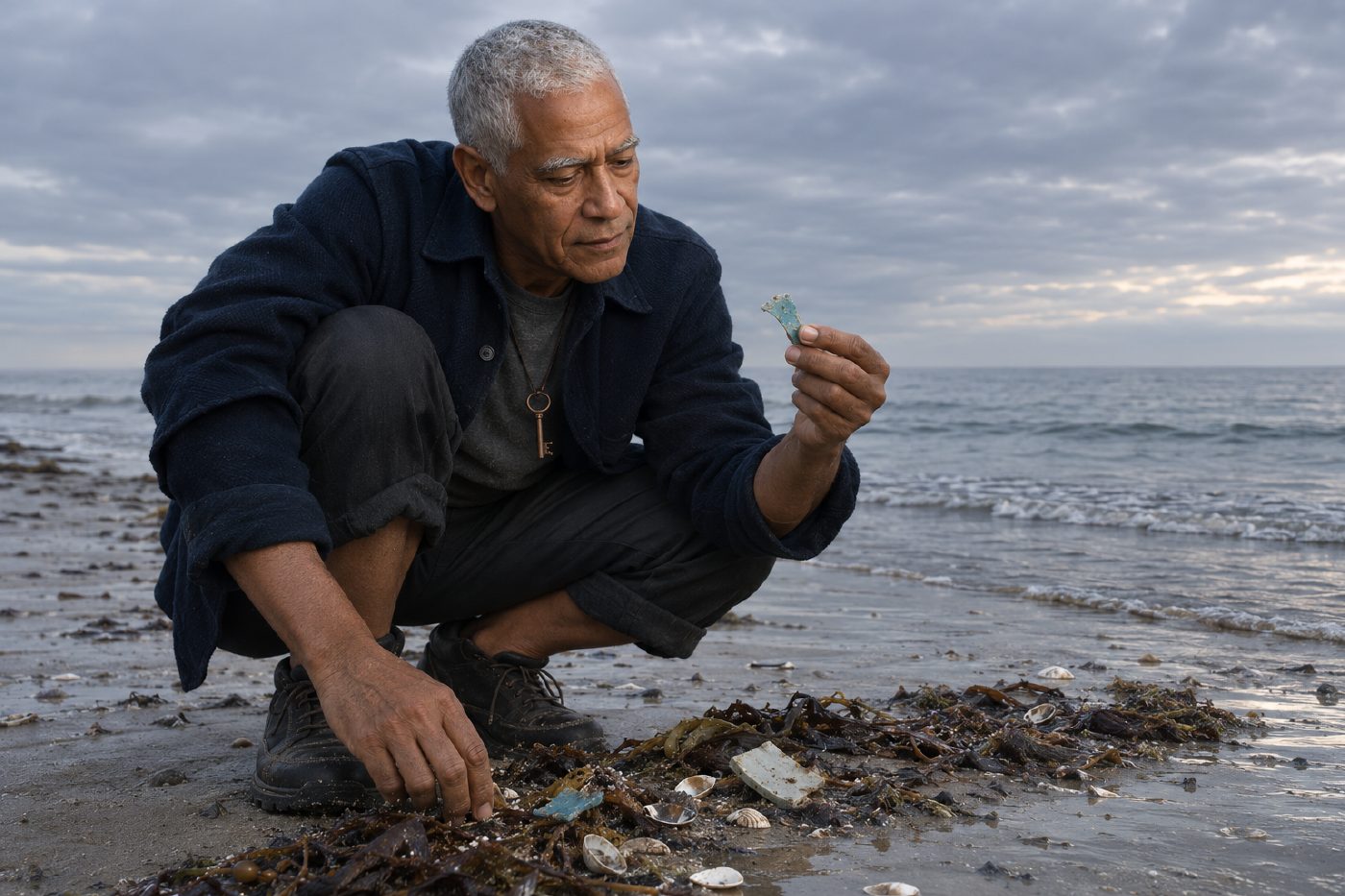
After the early session, Key crouches where the tide has drawn a thin line across the shore. Weed, shell, weed again—and a pale blue chip that almost passes for shell until it turns between finger and thumb. The morning light catches its worn edge. No hinge, no lock, yet here is something made to outlast its usefulness.
Key picks another fragment from the tangle. This little strip of beach is not the Great Pacific Garbage Patch, and these pieces carry no readable itinerary. But they make the distant mechanism easier to imagine: floating plastic carried by currents that converge, gathering it into a gyre between Hawaii and California.
The patch is not a solid island. It is an enormous accumulation zone, estimated at 1.6 million square kilometres. Sun and waves can break plastic into smaller and smaller pieces without making the problem disappear. A fragment too small to notice has not ceased to exist.
The sea slides forward, silver under the clouds. Key turns the blue chip once more, then sets it beside the other plastic picked from the weed. One small sorting, not a solution to an ocean. Still, this piece will leave the tideline in a hand rather than on the next tide.