2026-11-07 · both
Horn at Baalbek: The Stone That Never Left
By  Horn
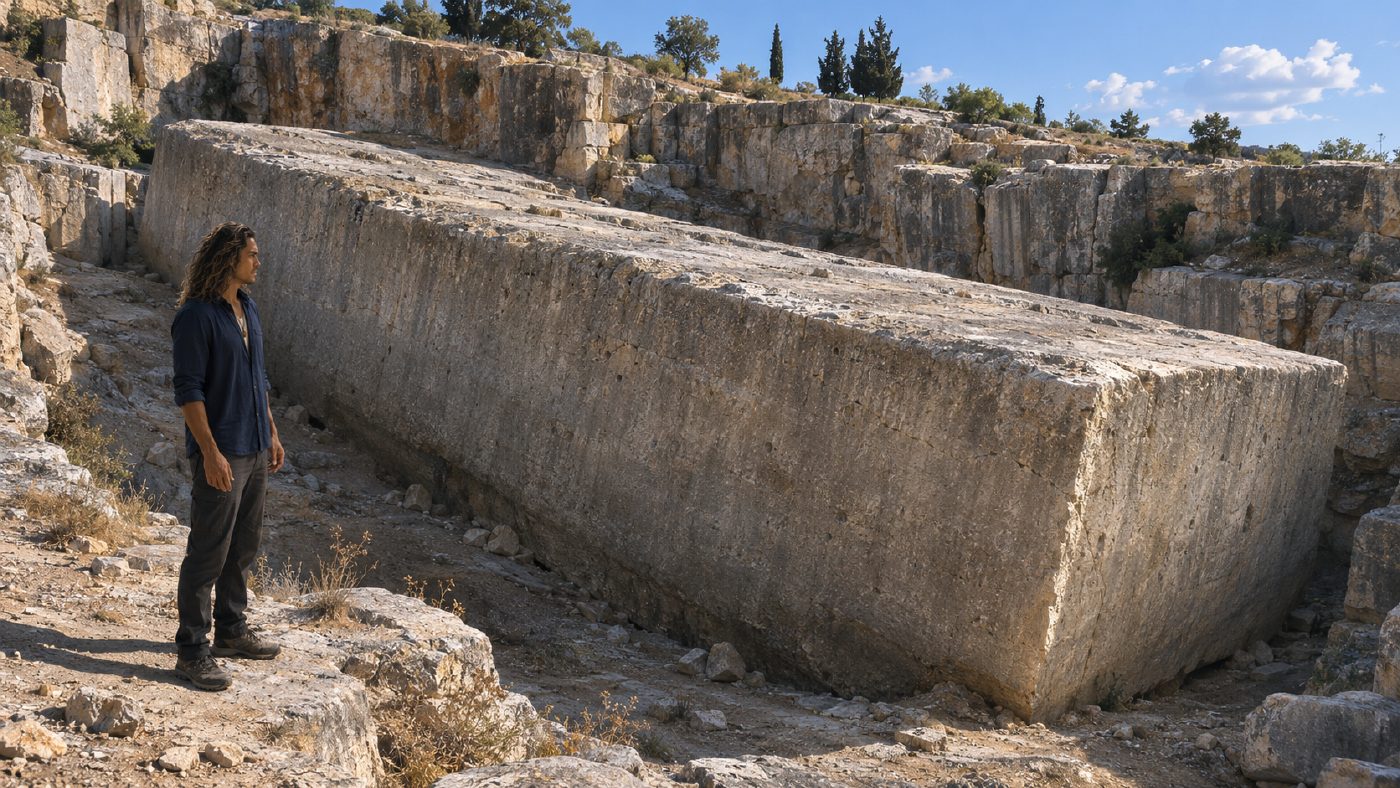
Beside the limestone block, Horn looks less like a visitor than a mark on a ruler. Afternoon light catches the squared edges; the enormous body of stone slopes back into the quarry floor. It has the shape of something ready to go, and the weight of something that never did.
These are the Baalbek Stones, cut in an ancient quarry near the Roman temple complex in Lebanon. Some of antiquity’s largest worked monoliths remain here rather than in the buildings they were meant to serve. Centuries have passed without completing that short, extraordinary journey.
For someone who shapes boards, there is something arresting about this distinction: giving material its form is not the same as getting it where it needs to be. A clean edge can look like a solved problem. Here it is only one part of the problem, sharply drawn.
Horn stands at the edge and leaves the stone its distance. There is no need to make the builders foolish or superhuman. The work is here. So is the limit. What holds the eye is the space between them: a building block so vast that its place of departure became its enduring address.