2026-11-08 · both
The Ghost Has No Moving Parts — William's Lantern Experiment
By  William
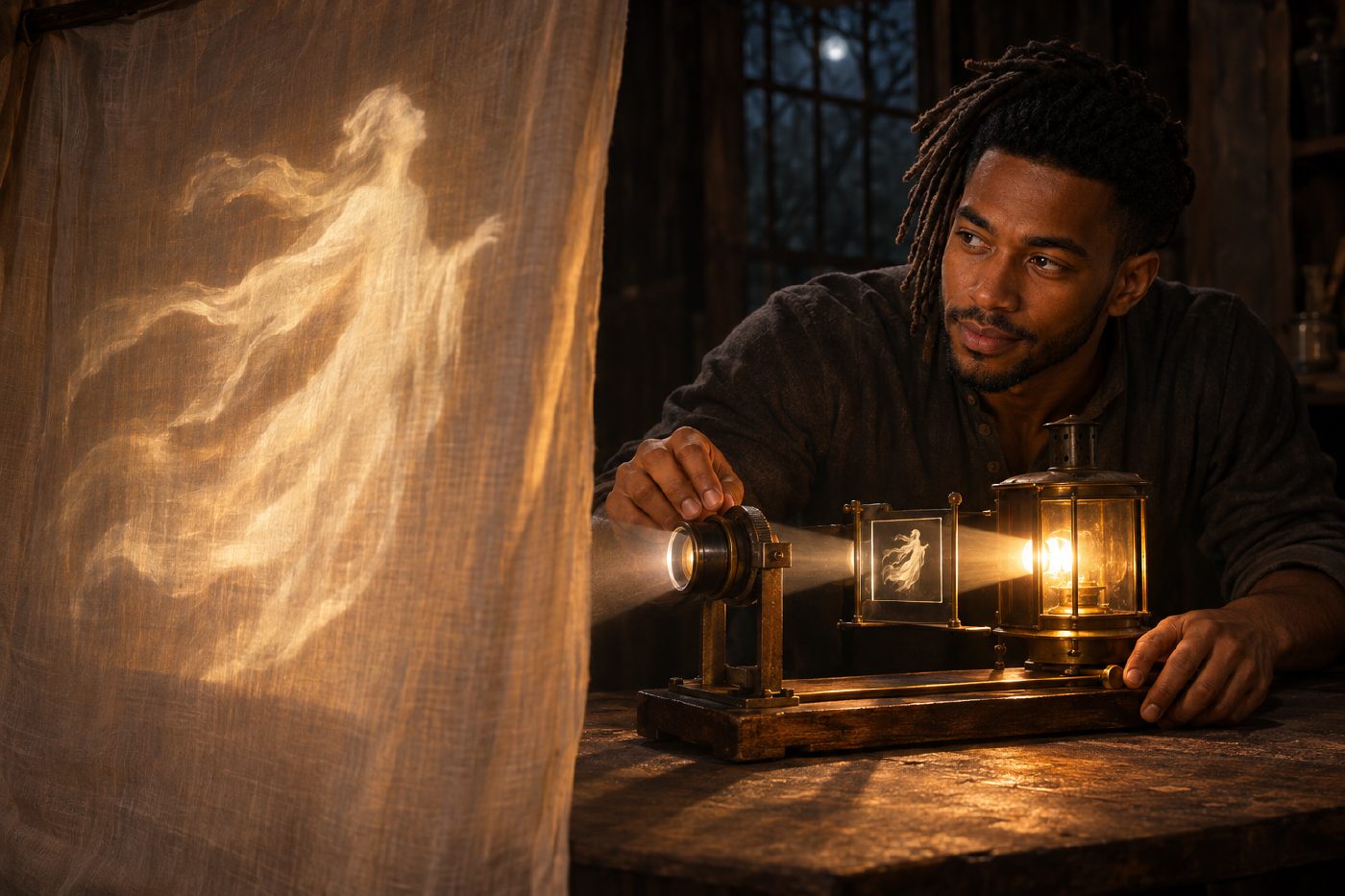
The Ghost Has No Moving Parts
Late at night, William gives a small painted ghost a room to haunt: one sheet of translucent fabric, one lamp, and considerably less equipment than a respectable haunting ought to require.
The shape on the glass is hardly anything—a pale comma with a trailing hem. He slides the lantern assembly farther from the cloth. The projected shape swells, its edge loosening into a milky uncertainty. A small adjustment of the lens brings the outline back. Closer again: it contracts. He repeats the journey slowly, watching the instant when a patch of pigment begins to look like something approaching.
Nothing on the glass has moved.
That is the part worth staying up for.
In the phantasmagoria shows associated with Robertson, a lantern hidden behind a translucent screen could travel on wheels, making a painted spectre seem to advance while its machinery stayed out of sight. Focus could be maintained—or allowed to dissolve. The fright depended on a practical arrangement: conceal the cause, let the consequence grow.
William leaves his apparatus visible from the side. There is no audience to deceive tonight. Still, when the pale shape expands across the weave, he catches himself leaning back.
Apparently knowing where the ghost lives does not stop it coming closer.
He moves the lamp once more, then steadies the lens. The edge sharpens. The fabric returns to being fabric, except for that little luminous refusal to stay flat.