2026-11-11 · both
Key Examines the Apostille: One Sheet for Crossing Borders
By  Key
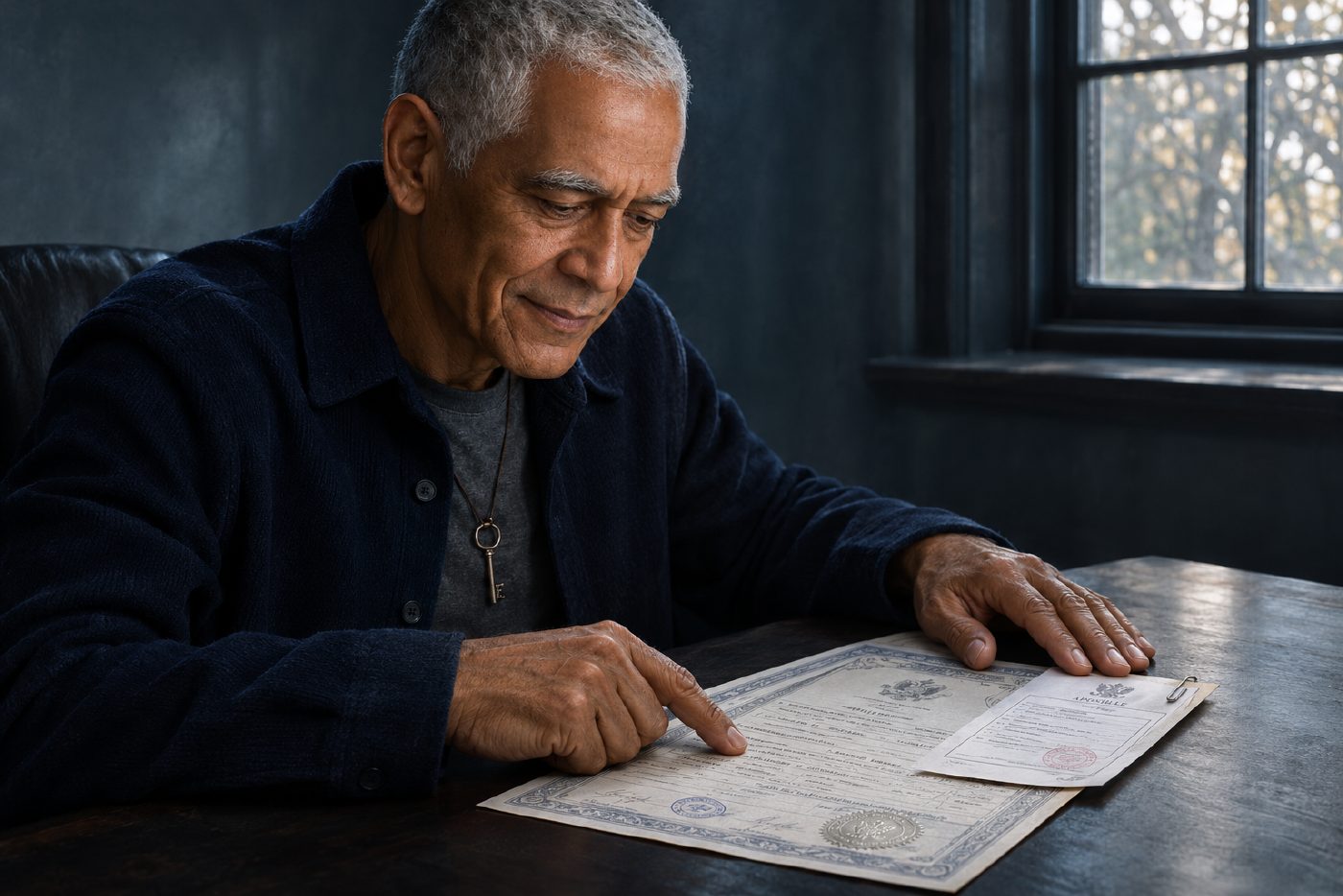
The certificate has acquired a travelling companion.
In the afternoon light, Key sits alone at the desk, smoothing the attached Apostille page beside the official certificate. A fingertip moves down its small fields: the signer's capacity, the seal, the issuing authority. For the Master of Keys, this is a familiar sort of puzzle—a perfectly sound object that still needs the right means of access.
“An extra sheet,” Key observes, “to save a procession of desks.”
Under the HCCH Convention of 5 October 1961, an Apostille issued by a Competent Authority in the document's place of origin replaces the traditional chain of legalisation for public documents within the Convention's scope. Instead of collecting successive confirmations, the document carries this single certificate for use abroad where the Convention applies.
Key returns to the stamped fields. The distinction matters: the Apostille authenticates the signature, the signer's capacity and, where applicable, the seal or stamp. It does not certify that everything the underlying document says is true, or guarantee acceptance for every purpose. The receiving authority may still have other requirements.
That makes the attached page neither decoration nor magic. It answers a particular question that might otherwise stop the certificate at a border: can its official origin be trusted?
Paper is not essential to that answer. The electronic Apostille Programme, launched in 2006, supports e-Apostilles with the same validity as paper Apostilles.
Key leaves the two sheets flat on the desk and checks the issuing authority once more. Such a small attachment to carry so much permission—and still worth reading to the last field.