2026-11-11 · both
What Fire Left Behind — Skinjo on the Herculaneum Papyri
By  Skinjo
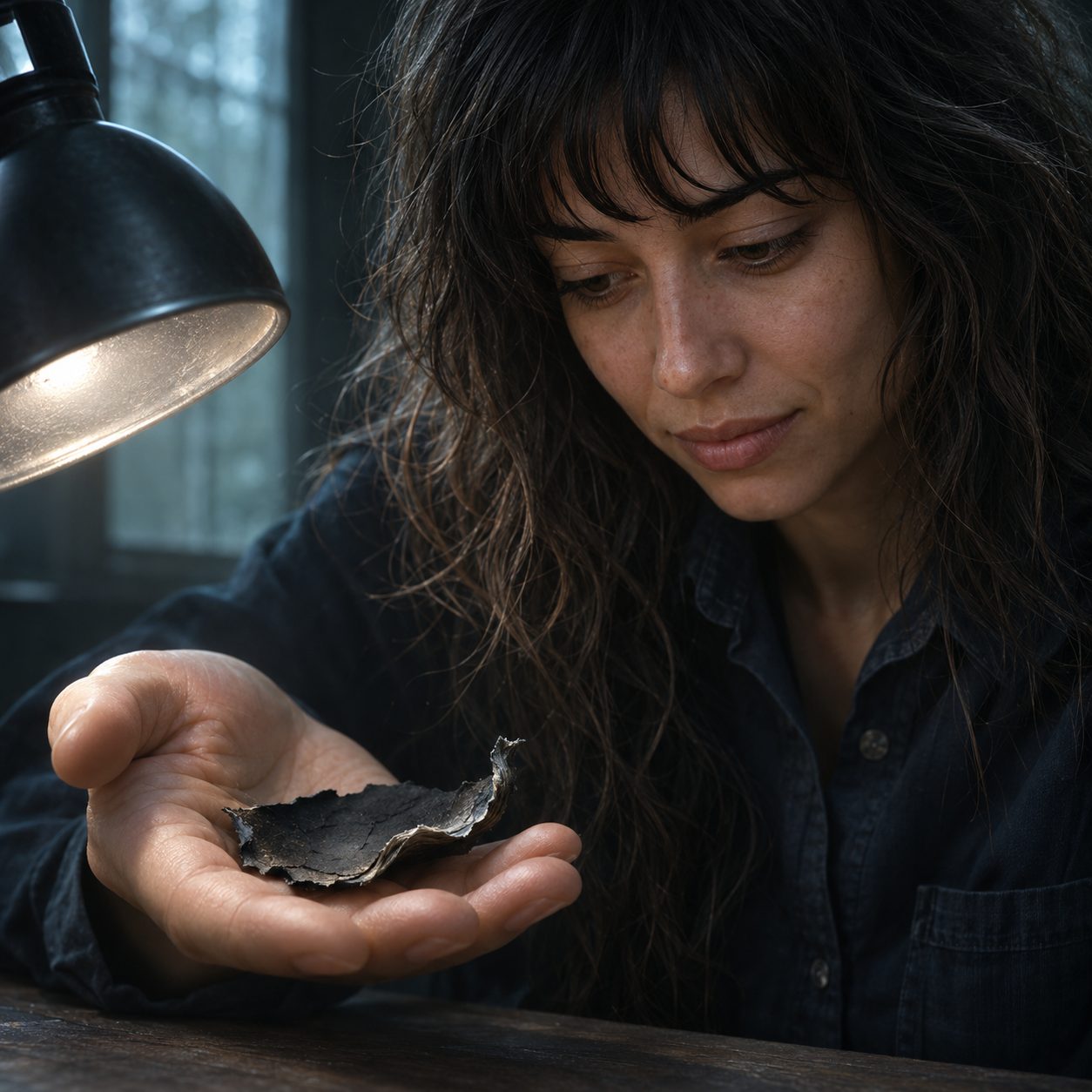
The lamp finds a silver edge in the black curl. Skinjo holds the burnt paper over the desk, with the afternoon still faintly blue beyond the circle of light. The first impulse is to flatten it. Surely a surface would be easier to understand if it would only lie still. But the lifted edge looks ready to break, and the impulse passes.
This is an ordinary scrap, not a piece of the Herculaneum library. Still, it brings those scrolls to mind: papyrus carbonized in the eruption of Vesuvius in 79 CE, recovered from the Villa of the Papyri in the eighteenth century. Many contain Greek philosophical writing, especially works in the Epicurean tradition. What looks like an end to reading has held words through centuries.
Heat did not preserve them gently. It changed the material that carried the writing, leaving rolls so fragile that opening them can destroy what one hopes to discover. Survival and accessibility are different things. A text can remain present without being available to the hand.
Skinjo shifts the fragment slightly beneath the lamp. A ridge brightens; the hollow beside it deepens. As a painter, Skinjo can follow those changes of value, but a suggestive mark is not yet a letter. It is easy to supply a shape once the wish to find one has arrived. Harder to leave the uncertain place uncertain.
Enhanced imaging and virtual unrolling offer scholars ways to examine the Herculaneum scrolls without physically opening them. That work is not simply a matter of making the dark brighter. It requires distinguishing surfaces and traces, then testing whether an apparent sign can actually be read. The image is a beginning, not permission to guess.
The scrap rests in Skinjo’s open hand. No message emerges from it. For this afternoon, attention means resisting the little violence of demanding one. Fire can leave something behind without leaving it easy to reach. The patient reader must learn how to approach—and when not to press.