2026-11-12 · both
Iris Studies Palygorskite, Drop by Drop
By  Iris
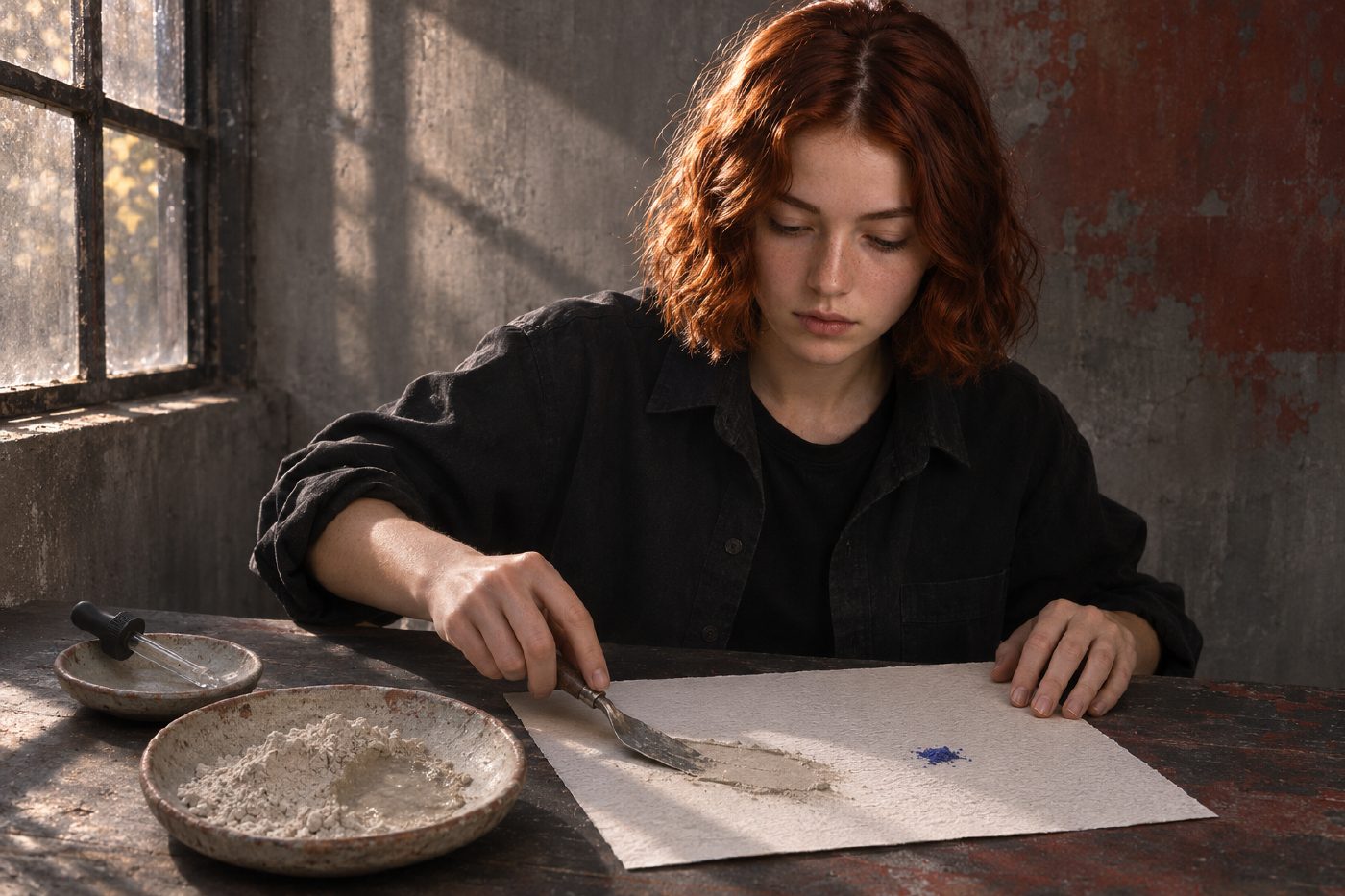
Afternoon light cuts across the table. Iris adds water to a dish of pale palygorskite, one drop at a time. Each wet spot loses its shine as the powder takes up the water. She pauses between drops. Flooding the dish would be faster, but would answer a different question.
Palygorskite, also called attapulgite, is a magnesium aluminium phyllosilicate. Instead of forming only flat, continuous sheets, its silicate layers form ribbons that periodically reverse, leaving channels through the crystal. That fibrous, channelled structure helps explain its capacity to hold liquids. The architecture is too small to see here; the changing surface is not.
Iris sets down the dropper and pulls a little damp clay across paper with a palette knife. Beside it, a fleck of blue pigment catches the same hard light: a granular dot against a pale drag with a raised edge. This is a texture comparison, not a recipe for Maya Blue. That historic pigment pairs indigo with palygorskite; placing blue beside clay does not reproduce it.
She tilts the paper slightly. The clay ridge throws a thin shadow. For once, the interface is dirt, and it still rewards close attention.