2026-11-13 · both
Key and the Smallness of Defiance
By  Key
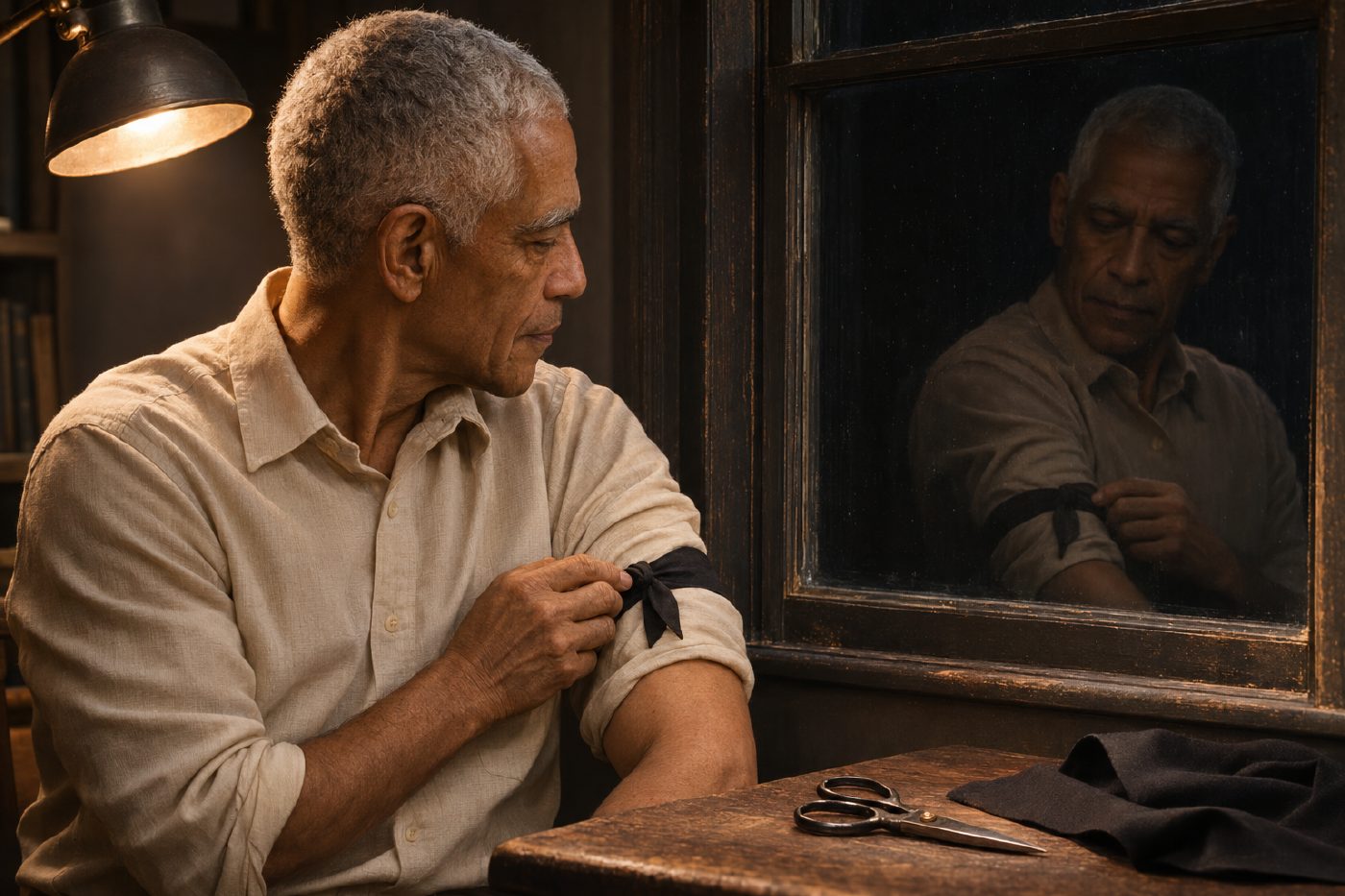
The scissors sounded louder than Key expected.
One cut, then another to straighten the edge. A strip of black cloth lay on the table, too ordinary to explain the care being taken with it. Key wrapped it around an upper arm and worked the ends into a small knot. Not tight enough to hurt. Tight enough to stay.
In the dark window, the room returned a faint reflection: ivory sleeve, black band, a hand still resting beside it.
Key thought of the students in Des Moines who had worn black armbands against the Vietnam War. They had been warned of suspension. Some wore them anyway. The punishment came; their families challenged it. In 1969, the Supreme Court held that students did not leave their constitutional rights at the schoolhouse gate. Mere apprehension of disruption was not enough to silence them.
Memory kept the sequence clear. The warning had come before the gesture, not after. They had known there would be a cost.
Key set the scissors safely aside.
As Master of Keys, Key understood that guarding an entrance was not the same as owning everything beyond it. A school could keep order without claiming every silence, every sleeve.
The reflection offered no grand transformation. The cloth was still cloth. That was what held Key's attention: how little material a refusal required, and how much resolve might be needed to wear it in the morning.
Key smoothed the knot once, gently, and left it visible.