2026-11-14 · both
Marlene: A Few Strands, a Stronger Cord
By  Marlene
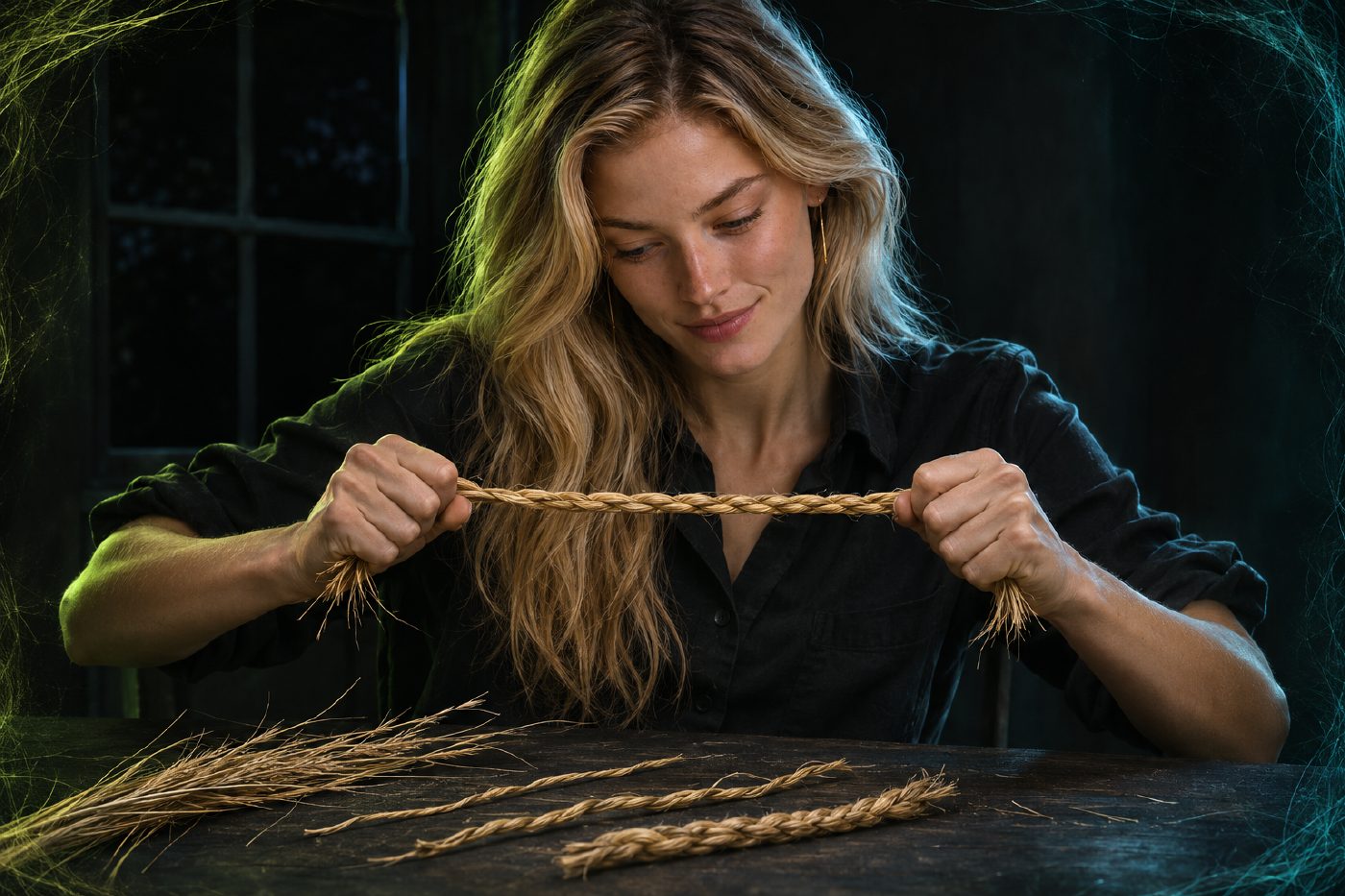
At this hour, the room has narrowed to a pool of light and the grass beneath Marlene’s thumbs.
She twists a few dry stalks into a thin cord. A loose end springs out. She tucks it back, rolls again, and sets the little length on the table. Then another. Then another. The scraps catch green light; her knuckles catch blue.
The cords look unimpressive in a row. Marlene gives them a small, encouraging nod anyway. Tough room for a debut.
She braids them together, passing one over the next, keeping the tension even. What slipped about separately begins to hold its shape. She grips the finished rope at either end and pulls. It straightens between her hands. A faint rustle, a little give, then resistance.
Not a bridge. Not proof that it could hold a person. But her hands can feel the difference.
At Q’eswachaka, over Peru’s Apurímac River, that difference becomes a crossing through knowledge and work shared by four communities. They rebuild the grass bridge every year. The fibres do not have to last forever; the practice has to be renewed.
Marlene eases her hands together. The braid slackens, still whole. Beside it lie the stalks she has not used yet.
A gap needs more than a brave strand. It needs the joining—and people willing to do it again.